Health? or Hype?
Make the right choice with recommendations you can trust, backed by expert testing.
Explore health recommendations
Having worked at the BBC and in commercial radio before joining Which?, James produces our always-on podcasts, and oversaw the launch of our member-exclusive podcasts in 2025.

With so much conflicting advice out there about dieting, healthy eating and weight loss how can we tell fact from fiction?
In this episode of our health and wellbeing podcast, we're joined by our public health nutritionist, Shefalee Loth, and the founder of CityDietitians, Sophie Medlin, to bust some of the biggest myths that relate to our diets.
Are all UPFs bad? Is it worth buying frozen fruit and veg? Can we eat any carbs if we want to lose weight? Our experts share their knowledge to help us get our diets right.
Rob Lilley-Jones: With the New Year upon us, plenty of us will be looking to refresh our diet. But with so much conflicting advice out there, what's true and what's not? Welcome to this podcast from Which?
Hello, it is Rob Lilley-Jones here with yet another brand–new episode of our healthy living podcast, bringing you expert advice and recommendations to help you live your best life every day. And as always, our top team are here in the studio – our public health nutritionist, Shefalee Loth.
Shefalee Loth: Hi.
Rob Lilley-Jones: Welcome back. And also the founder of City Dietitians, Sophie Medlin.
Sophie Medlin: Hi.
Rob Lilley-Jones: It is brilliant to have you both back here. We are going to be doing some nutrition myth–busting on today's podcast.
Right then. There is so much information out there, not just about what we are doing later this week, but specifically about what we should and should not be eating and nutrition generally. Can we understand why people do not find it simple to understand what should be making up part of our diet?
Shefalee Loth: I would say there is so much conflicting advice out there, especially with the rise of social media. All of a sudden, everybody can be an expert and everybody has got their own views, their own preferences on what they eat. And people have huge platforms and so can get their messages out to really wide groups of people. But actually, those messages are not always founded in science.
Rob Lilley-Jones: And Sophie, what are the big things that your clients are coming to you and asking you about their diet?
Sophie Medlin: Oh, it is something different every week, genuinely. There are still things – I was in clinic yesterday and someone mentioned something to me and I cannot remember what it was, but it was about hydrolysed water. And I was – oh no, hydrolysed water? And I was – I do not know, but it sounds like a fad. So I think there is so much information out there as Shefalee says. And I think one of the things that is really important to remember is that government guidelines based on the best possible evidence that we have have not changed in decades. And the reason that we are not getting healthier is not because those guidelines are wrong, but because we are not following the guidelines. They are created from decades of really solid research and are re–proven time and time again to be the right way of eating. And yet, social media people who claim to be experts – and sometimes some of them are medical doctors and all sorts – will undermine these kinds of guidelines and say they are not right because they have got something that they want to say about things, when in reality, if we all ate that way, we would not have anywhere near the level of health problems that we have now.
Rob Lilley-Jones: But these experts, these influencers who are on social media, I suppose the information they are giving is more accessible, by which I mean they are coming to people via someone's phone while just sitting on the sofa, whereas these guidelines, I do not know, maybe sit on a government website somewhere?
Shefalee Loth: True, but also it is not really that exciting to say eat five fruit and veg a day, or eat some carbohydrates and some protein and a bit of dairy. That is not that exciting; it does not sound revolutionary. Whereas some people can say, "Well, if you cut out this food group, it is going to solve all your problems." Now, that obviously sounds a lot more appealing to somebody. And so a lot of these fads go against the scientific evidence, but they might pick up on one small study and really promote that to back up their argument, but actually they are not looking at the whole body of evidence.
Rob Lilley-Jones: Can we start with something that Shefalee, I know you have spoken a lot about, which is ultra–processed foods? Now, they have obviously got a bad reputation; we hear about them all the time. Are they all bad?
Shefalee Loth: Okay, so I think simply put: no. I do not think all ultra–processed foods are bad. Do I think as a nation we eat too much ultra–processed food? Then yes. And could we all benefit from moving away and changing our diets to include more whole foods? Then absolutely. But I feel like this blanket demonisation of – well, it is not even one food group because ultra–processed foods are in every food group – I do not think it is helpful to people. And I bang on about this example lots, but bread, for example. Bread is a really good source of nutrients. If you are eating whole grain brown bread, you are getting fibre, you are getting B vitamins. And people saying, "Well, bread is ultra–processed, you should cut it out," what is the alternative? Are we really expecting people to spend five pounds plus on a fresh loaf of sourdough, or are we expecting people to go hungry, or make their own? All these things, I feel like they do not come from a place where people are thinking about how everyday people live. And actually, if you are saying to somebody you cannot eat bread now, I think the knee–jerk reaction to that is a lot of consumers will just say, "Oh my god, I cannot eat anything, what am I allowed to eat?" and then they totally switch off, and that is really not what we want people to do.
Rob Lilley-Jones: And it is not just bread; there are some other surprising examples of foods that are listed as ultra–processed but again, not bad for us, or not that bad for us?
Sophie Medlin: Yeah, I think breakfast cereal is another classic example like bread. And some breakfast cereals, of course, have got very different colours and look completely different to the cereals they started out as. But many are still wholesome foods with great nutrient fortification in them – different vitamins that are more difficult to get elsewhere in your diet that for decades we have really relied on as a country in terms of sources of something like iron, for example. So I think we should not throw them out with the bathwater. The same as things like fish fingers and baked beans; things that people really recognise, things that people feel comfortable with, things that have loads of benefit and ultimately probably are ultra–processed, but does that mean they are bad for us? No, not necessarily.
Rob Lilley-Jones: So, the headline from ultra–processed food then: moderation is key?
Shefalee Loth: Yeah, and also think about what you are eating. A lot of ultra–processed foods are things like chocolate bars and crisps and biscuits, and we know we should not be eating loads of those. Whereas actually sliced bread, fish fingers, beans – they also contain really important nutrients in our diet.
Rob Lilley-Jones: We have also got a great video on our social channels that Shefalee, you have presented. If you go and follow us @WhichUK over on socials, have a scroll down the feed, you will find Shefalee talking all about the ultra–processed food swaps that you can make, so go and check that out as well. What about fruit and veg? Fair to say we are not getting enough of it; we are not eating as much as we should?
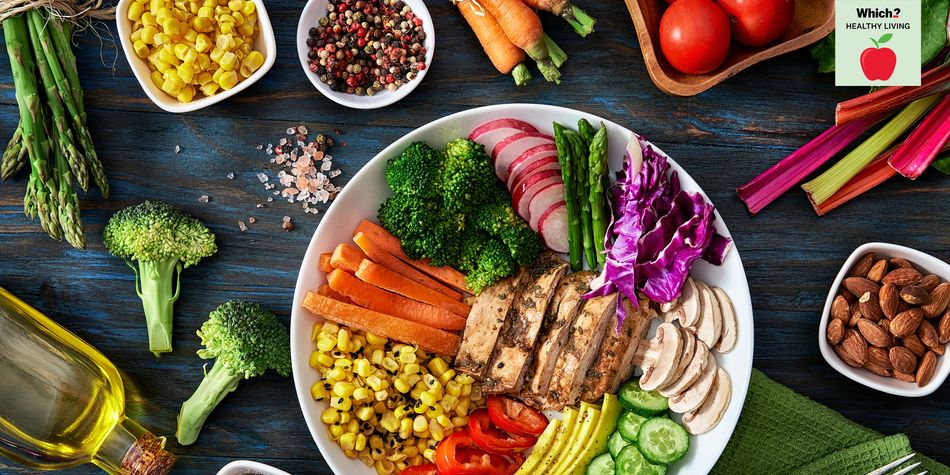
Sophie Medlin: Yeah, absolutely. At population level for many, many years, we have known that people are not eating as many fruits and vegetables as we would like them to. And one of the things that I always say to my patients and say in presentations and things when I am talking to people about fruit and veg is that for every additional portion of fruit and vegetables you have, you reduce your risk of heart disease, diabetes, certain cancers. We do not bang on about these things for fun; we say it because literally for every increased dose your risk of certain diseases goes down.
Rob Lilley-Jones: On that, is it the case that you should be eating a wide variety of fruit and veg, or say your favourite fruit and veg? Say you like a banana and an apple and a tangerine and that is all you ever eat of fruit, and then of veg you like carrots and broccoli but you do not like other veg. Is that still enough or should you be introducing variety into your diet?
Sophie Medlin: In an ideal world, we would like people to have a really good variety of fruits and veg in their diet. If the only ones that you like include five different types of fruits and/or vegetables and you eat those on repeat, that is certainly a lot better than not having any fruits or vegetables at all.
Rob Lilley-Jones: And what about frozen fruit and veg? Is that still good? Can that still be good?
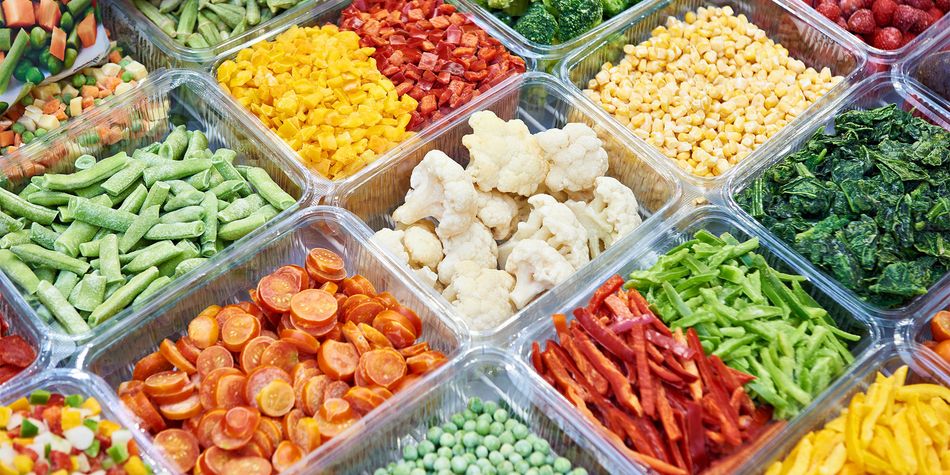
Shefalee Loth: Yeah, absolutely. I think people have always been a bit snooty about frozen or tinned fruit or tinned veg. But actually, first of all, they are cheaper. Secondly, they will not go off – they do not spoil in the same way – so that leads to less food waste and so ultimately you save money that way as well. And certainly in some circumstances, such as frozen peas, they are flash–frozen within a couple of hours of picking, so they retain their nutrients much more than perhaps fresh do. So they are not inferior by any means. Sometimes you might lose out on texture and things, but just use them wisely – you probably do not want to use frozen broccoli in a salad, for example, but in a stew or a soup, it is not going to make any difference to you.
Rob Lilley-Jones: And as you said there, it can just be more convenient, can it not? I know me and my wife, we have gone away from buying big heads of cauliflower because we would use some of it and then some of it would go off, and we buy a bag of frozen cauliflower and then like you said, you can put that into curries, for example, and it is actually really good and the taste is actually still there, but also you are not wasting as much?
Shefalee Loth: No, and the nutrients are still there, more importantly.
Sophie Medlin: I think one of the things that you mentioned earlier but is really important to say is that when we demonise certain foods or we look down our noses at frozen or fresh – there are people out there who might think, well, I might as well not bother because canned is not that good and it is the only thing I can afford or I am disabled and it is the only thing I can really have, or same with frozen, for example. And actually the message is that any fruits and vegetables and any whole foods are great for us; it is about doing the best you can with what you have got.
Rob Lilley-Jones: What about the phrase that is sometimes bandied around: "The sugar in fruit is bad for you"?
Sophie Medlin: Yeah, it is one of my real bugbears. I used to do a lot of boxing and I went to – I did some coaching with some children and a little girl who was probably about seven said to me, "Oh, I am worried about how much sugar there is in fruit." And I just thought, if that nonsense message has got down to someone of that age, that is a really scary and sad thing. We do not worry at all about the sugar that is in fruit. We would put a little caveat around dried fruit, because it is very easy to eat a lot more dried fruit than you would have of the fresh fruit and then you can get a bit more sugar. But whole fruits, even in smoothie form, are still just as good for you. Once you take the fibre away and they are in juice form, then again we would think a bit more about the sugar content, but ultimately smoothies and fresh fruit – we do not need to worry at all about the sugar content.
Rob Lilley-Jones: And Shefalee, what about fruit juice?
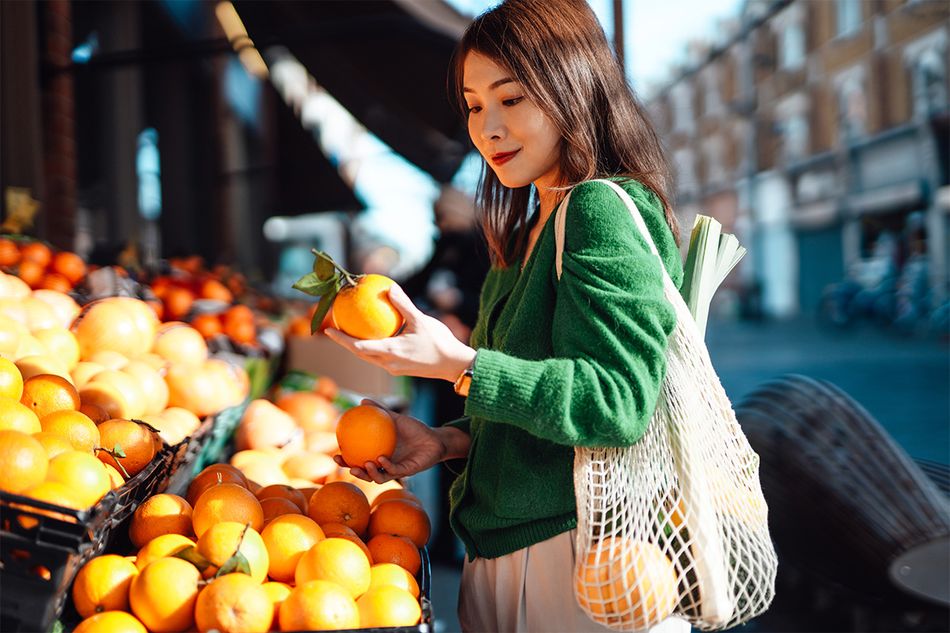
Shefalee Loth: Okay, so Sophie touched on that slightly. When you juice a fruit, you obviously remove a lot of the fibre and you free up the sugar, so they are not in the fibres of the fruit. So actually fruit juice, it does count towards one of your five–a–day, but we would be saying you should not be getting all of your five–a–day from juice because actually it can be damaging to teeth. And also if you just think about it logically, if you eat an orange, you will get the sugar that is in one orange and it will fill you up. Whereas if you drink a glass of juice, that is probably got three or four oranges juiced into it, so you have got sugar from three or four oranges in there.
Rob Lilley-Jones: Carbs. Can we do carbs?
Shefalee Loth: We can do carbs!
Rob Lilley-Jones: I mean that is basically my question: can we do carbs? If we move on to carbohydrates, it has almost become a bit of a dirty word, has it not? People are saying we should cut carbs out completely if we want to lose weight – if that is something we want to do. Do we have to cut carbs out completely? Is that something we should do? I am assuming no?
Shefalee Loth: No, you should not. And there has been a huge trend for quite a number of years now about people thinking bread is really bad for them and they are avoiding gluten. And obviously if you are celiac, then of course you should remove gluten from your diet. But actually for most of us who are not, then it is perfectly healthy and perfectly safe to be consuming. I think carbs have a bit of a bad rap because obviously protein is the thing that is put on the pedestal, whereas carbs – carbs are delicious. If you think you have got your pasta, your potatoes, rice – that is what brings the joy to – well, that is what brings the joy to my food, anyway.
Rob Lilley-Jones: I am going to do a quick quiz with you, which is what I do with my friends. This is how we hang out at the weekend. Top five carbs, if you were to list them – so we have got potatoes, rice, noodles, bread, and pasta?
Sophie Medlin: Oh, it is tough, it is tough. My husband makes the most amazing saffron rice, and that is probably one of my favourites now, having not eaten a lot of rice growing up. So I think rice is up there for me. And then potatoes, obviously, are so good when they are done well. I particularly love fries; I know it is bad, but I really like them. So probably rice, fries, pasta – what else did you say?
Rob Lilley-Jones: So we have got rice, potatoes, pasta, and then we have got bread and noodles?
Sophie Medlin: I forgot about noodles! So probably bread then noodles.
Shefalee Loth: I think my top would be a tie between pasta and bread. And I think rice would be at the bottom for me.
Sophie Medlin: You need to come and try my husband's rice!
Rob Lilley-Jones: Again, let us know – just for fun, let us know what your top five carbs are – because as we said, we should not necessarily be cutting them out. And that is what I am coming onto next, which is we should not cut them out completely. Is it dangerous, would it be, to cut carbs out completely?
Sophie Medlin: It is not necessarily dangerous. I think it can certainly lead to restrictive eating in a way that is disordered, I would consider. But really importantly, it can massively negatively impact your microbiome. So gut bacteria really need whole grain carbohydrates to thrive – certain species of them need them. And after – remember lockdown where everyone was – and I say everyone flippantly – but everyone was doing keto diets and CrossFit? My friend was running a CrossFit rehab from everyone dislocating their shoulders, and I was running a keto rehab from all the people who had cut out carbs and had terrible IBS because they had starved their gut bacteria for X amount of time. And that is where people can run into real problems. And the low–carb community are loud and they are outspoken on social media and it all can sound very, very convincing. But there is absolutely no need when we look at studies of people who are put in labs and fed the same amount of calories from different food sources; there is no superiority to low–carbohydrate diets in comparison to other calorie–controlled diets in terms of weight loss impact.
Rob Lilley-Jones: And you mentioned whole grain there as well. Whole grain is really important here, is it not?
Sophie Medlin: Yeah, we love whole grains because they contain other nutrients, but also lots of fibre. So if you imagine if you eat a piece of white bread, the sugars from that are going to be released very quickly and then you are going to be hungry again very quickly. It is one of the reasons why it is not to be avoided, but it is something to be considered. Whereas with brown bread, the carbohydrates, the sugars are released much more slowly, you get a lot more fibre, it is going to keep you fuller for longer and give you more nutrients than if you chose the more processed alternative.
Rob Lilley-Jones: We have mentioned there why you probably should not cut carbs out. Just overall in terms of cutting out certain foods, or cutting out food entirely – because there is obviously a big push from some parts of the dieting community around fasting – where are we at with that? I know it is slightly different when we are talking about nutrition, but the fasting obviously does come into that as well. Is that something that you advise some people can do safely?
Shefalee Loth: Well, I guess it depends what type of fasting we are talking about. So there is the intermittent fasting or the time–restricted fasting where you will only eat in a certain window in the day. So you might say, "Okay, well, I think time–restricted fasting is you will eat all your meals within an eight–hour window." So you might miss breakfast and then have lunch at twelve and then dinner before eight. And actually if that works for your lifestyle, that is absolutely fine. The other type of fasting is things that are known or promoted as detox or cleansing diets, and those involve where you might just cut out all food for a certain amount of time or just have juices. And I would advise against those.
Sophie Medlin: Absolutely. And I see as well on social media that people are doing extended water fasts – so only having water for maybe even a week at a time. That is really dangerous. And bringing food back into your diet can cause all kinds of dangerous electrolyte shifts. I think it is fairly obvious that you are going to really struggle to work or function as a normal person if you have not had food for three days. So we need to be very careful with that. The only evidence–based time–restricted eating trials are the 16:8 patterns where you fast for 16 hours and you eat in an eight–hour window. One of my bigger concerns about fasting and time–restricted eating is that I see people taking it to an extreme where they no longer eat dinner with their family and their kids. They are – their fasting regime means they cannot go out for dinner with their friends and they cannot do anything and their life is really restricted. That again, as we talked about with the carbs, is going down that restrictive eating, disordered eating type pattern. And so I think we – again as Shefalee says, if missing breakfast is fine and you feel fine, fine, no problem at all. But do not let it become so rigid that it affects your quality of life and your family life and those things that are important.
Rob Lilley-Jones: We mentioned at the top, this is all so confusing only because there is so much out there and we are hearing so many different messages especially from social media. Is there anything else that you want to give a mention to?
Shefalee Loth: Yeah, my biggest bugbear at the moment is the seed oils are evil. And there is a really vocal brigade on social media that tell you that seed oils are the cause of all evil. And actually that is not what the evidence shows. All of the evidence shows that actually seed oils are really healthy. If you replace saturated fats in your diet with seed oils, they are really – that is really good for your cholesterol health, your heart health. But that has not stopped people really jumping on this seed oils are terrible bandwagon. I do not know what some of the causes are?
Sophie Medlin: No, I think it is sort of trying to, like we talked about right at the beginning, find something to blame and then really go to town on that. And it is a difficult thing to unpack. There is even apps now that tell you what foods have got seed oils in them and what to avoid and all this kind of stuff. It is complicated and it is difficult in terms of psyche, but in terms of research it is very obvious that seed oils are not doing any harm at all and in fact are much more beneficial to us than some of the saturated fats out there that you might consume in place of seed oils. It is a messy space and I think it just takes a couple of really vocal people who perhaps have – you know – a bit of a platform or a bit of credibility behind them to say these things and before you know it, it spreads like wildfire.
Shefalee Loth: And actually one of the arguments I have seen is, "Well, since our increase of seed oils, our dietary increase of seed oils has increased, the incidence of X, Y, and Z disease has increased too." And actually what Sophie was saying is it is not that our diets have changed massively; it is just that we are not following the diets that we are meant to follow. And that is the problem; it is not just the introduction of one of these seed oils that has caused all the problems.
Sophie Medlin: And what is so interesting to me is that there will be people listening to this or watching this who will think, well, they are absolutely wrong about that, and be really angry about what we are saying about these things. It could be on any of the topics we have talked about. People get so invested in their nutrition identity and the things that they believe in.
Rob Lilley-Jones: And in your community, the area of social media that you are following or you find on your algorithm?
Sophie Medlin: Yeah, and the same goes for vegan diets, people who are now carnivores. There is so many dietary tribes in nutrition that everything that you read perpetuates the things that you believe in. And that algorithm stuff is dangerous because you believe everything that you read and – unless you have a good broad understanding of the nutrition research base behind something like seed oils, which frankly I do not. I speak to some of my colleagues who have been researching seed oils and other fats for decades and say, "What is this nonsense?" and they say, "It is nonsense," and I say, "Okay, that is really helpful, thanks." And – if you do not have access to that kind of advice, it can be so easy to get swept up in this stuff.
Rob Lilley-Jones: I should say we have loads of great advice on Which.co.uk so make sure you do go over there and read that. Guys, it has been brilliant. Thank you so much – really, really useful as ever and we really appreciate it. So Sophie, Shefalee, thank you.
Shefalee Loth: Thank you so much.
Sophie Medlin: Thank you.
free newsletter
Sign up for our Healthy Living newsletter, it's free.
Our Healthy Living newsletter delivers free health and wellbeing-related content, along with other information about Which? Group products and services. We won't keep sending you the newsletter if you don't want it – unsubscribe whenever you want. Your data will be processed in accordance with our privacy notice.
Best multivitamin supplements - our experts recommend the products that have all bases covered
Get the Which? lowdown on popular health topics, with insight from leading experts and our in-house research team. More episodes from our healthy living podcast series:
Make the right choice with recommendations you can trust, backed by expert testing.
Explore health recommendationsThe Which? podcast showcases the best content from across our website and magazine.
Which? Money episodes, released on Fridays, give advice to help you get on top of your bills and tackle the issues hitting your pocket, from spiralling energy costs to your weekly food shop.
The Which? Shorts podcasts offer you a free insight into some of our favourite articles from our suite of magazines.
Plus, keep an eye out for bonus episodes that tackle important issues, from motoring to tech, health and wellbeing to travel.
We're always releasing new episodes, and the podcast is available wherever you usually listen to podcasts.
Subscribe using one of the links below or click this link on your mobile to find us in your favourite podcast app.
As part of your subscription, Which? members also get access to exclusive podcasts.
If you're not already a member, podcast listeners can get 50% off the first year of an annual membership.