Health? or Hype?
Make the right choice with recommendations you can trust, backed by expert testing.
Explore health recommendations
Having worked at the BBC and in commercial radio before joining Which?, James produces our always-on podcasts, and oversaw the launch of our member-exclusive podcasts in 2025.

Calorie counting. Slimming clubs. Fasting. Detoxing. What really is the best way to stay healthy through the food we eat?
In this episode of this six-part podcast series focussing on improving your health (first published May 2025) James Rowe sits down with Which? public health nutritionist Shefalee Loth and Professor Giles Yeo, a geneticist from Cambridge University to pick apart a range of some of the most popular diets, giving you a better idea of which one could be best for you.
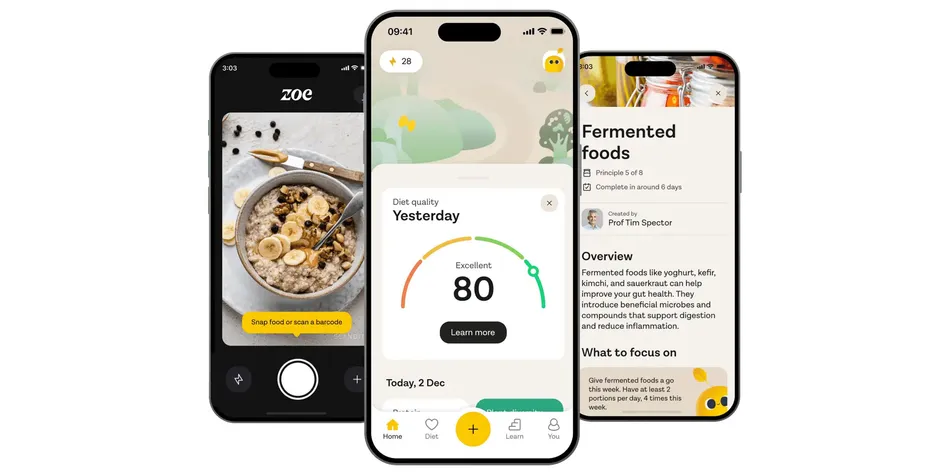
Plus, Shefalee shares her experience of using Zoe, a gut health app.
James Rowe: Calorie counting, slimming clubs, fasting, detoxing – what really is the best way to stay healthy through the food we eat? Welcome to this podcast from Which?. Hello, I’m James Rowe, here to bring you the second part of this podcast series, giving you expert advice and recommendations to help you live your best life every day. Today, we’ve got two experts lined up to help us focus on diet and nutrition. First of all, let’s welcome Shefalee Loth, a public health nutritionist here at Which?. Shefalee, hello.
Shefalee Loth: Hello.
James Rowe: Good to have you here. And Professor Giles Yeo, a geneticist from Cambridge University. Hello.
Giles Yeo: Thank you for having me.
James Rowe: It’s good to have you here as well. Well, shall we start with the basics around this? What is the best reason to diet in the first place? Or to stick to a certain diet? Is it purely for weight loss?
Shefalee Loth: No, I think there are lots of reasons why you might want to watch what you eat, and health is a major one. In the UK, we have a real problem – well, worldwide we have a real problem – with people suffering with overweight and obesity, and there are a whole host of illnesses that are linked to being overweight. It increases your risk of diabetes, of heart disease, of many types of cancer. So, there’s a real reason why we should be healthy.
James Rowe: And a lot of these reasons you mention are after – effects of not being on the right diet or not eating the right food to begin with?
Giles Yeo: Is it true that the vast majority of non – communicable diseases today are diet – related? Undoubtedly. So, this includes obesity and all of the related illnesses. So, I guess, yes, if it’s non – infectious, the likelihood of diet playing a role is pretty high.
James Rowe: And I think there’s a misconception with the word diet. A lot of people might think when somebody says, "I’m on a diet," they might think negative connotations. It makes it seem like they’re doing it because they want to lose weight. But we should all be on the right diet, shouldn’t we?
Shefalee Loth: Absolutely. And your diet is just what you’re eating. Now, you’re right, people think diets mean diet plans and restrictions, and that’s not the case. We have the Mediterranean diet, which is a recommended diet that we all follow, and that just means eating lots of fruit and vegetables, whole grains, lean proteins, and olive oil. Lots of countries in the world follow that diet generally anyway.
Giles Yeo: Diet actually comes from the Greek word diaita, which means a way of life. And so for forever, diet has been a way of life. It’s only recently that it has become something of exclusion that we actually discuss, rather than something that should be a way of our life.
James Rowe: It’s just a byword for lifestyle, I guess, isn’t it?
Giles Yeo: Exactly. Your diet is your lifestyle. And because we’re talking about the food – and clearly food is such a big part of our lifestyle – it should be a joyous topic to talk about, rather than spoken about with exclusion and furrowed brows.
James Rowe: And obviously a lot of people do take up a particular diet – we’ll talk about some of them today – for weight loss. Generally, how easy is it or difficult is it to actually lose weight via the right diet?
Giles Yeo: Do you know what? I think most diets – there are some bat – crazy diets out there – but most diets actually do work, at least in the short – term, at least for some people. So, the trick, as it turns out, is not the weight loss bit of it, which most people can grit their teeth and get through and lose the weight. The trick is the maintenance. And I think that is the most difficult part. People say 95% of diets don’t work. It’s not true. 95% of diets you can’t stick to. So, I think that is the problem.
James Rowe: So, this is you speaking about keeping it up and doing it for the long – term. You might be able to do it for two weeks or something, but doing it over a few months, it gets difficult.
Giles Yeo: Correct.
James Rowe: Well, shall we chat about some of the diets that are out there that people do take up? Calorie counting. That’s one I want to start with. It’s something you can do quite easily and I think more recently as well, apps on our phones have made it even easier.
Shefalee Loth: Yeah, and ultimately, if you’re going to lose weight, you’ve got to have a calorie deficit. And traditionally, if we think back to the 70s, 80s, most diets were about calorie counting. But actually, we know now that it’s not just about calories. And Giles has written a really good book about this. So, I’m going to hand over to Giles to explain it.
Giles Yeo: When we talk about this and talk about calories – and the moment you disagree with the whole concept of calorie restriction or for that matter a calorie deficit, immediately you become anti – physics. Now, I’m not anti – physics. So, I think the main issue with calories is it gives you only one piece of information. 200 calories of chips is twice the portion of 100 calories of chips. But so is 200 calories of carrots twice the portion of 100 calories of carrots, and no one is trying to compare chips and carrots. So, I think calories tell you how much food there is, particularly when you’re talking about one type of food, but that’s it. It gives you nothing about the nutritional content of the food, which I would argue we should be focusing on more.
Shefalee Loth: Absolutely, I’d say the same. 100 calories of crisps is not the same as 100 calories of apple.
James Rowe: I think the main point with this one is all calories aren’t the same. We don’t count them the same, do we? It’s not as if you could sit there and eat purely carrots all day and expect to hit the right nutritional goals, could you?
Shefalee Loth: Yeah, absolutely. And Giles, in his book, talks about how caloric availability – is that it?
Giles Yeo: Caloric availability is the amount of calories you can extract from a food as opposed to the total number of calories stuck in the food. So, I think people always think we eat calories. We don’t eat calories. We eat food, and then our body extracts the calories. So, depending on what we eat, your body has to work more or less hard to then extract the calories. The calories are all equal once they’re in you as a little poof of energy, but they have to first be consumed as food and that takes energy to sort of break down.
James Rowe: And some foods are harder to get calories from. Is that what we’re trying to say?
Giles Yeo: Yeah, so famously, I mean, you know, like the celery. Celery. Or the celery. But famously celery, where people say it’s negative calories. It’s not actually negative calories. I think that’s slightly overstated. But a medium stick of celery really only has around six calories, so it’s nearly negative. What’s interesting is if you cook the celery, if you chop it up, you put it into a stew, whatever you’re going to do with it – just the celery – you suddenly increase the caloric availability of the celery to 30 calories. So, raw celery is six calories to a human being, not a nuclear power plant, right? Whereas cooked celery is worth 30 calories to us. We haven’t added calories, just by cooking it has increased the caloric availability of the celery.
James Rowe: Fascinating, hey? We’re all learning here. Should we do some quick basics on calories as well? How many calories should we be getting a day? Just the quick basics here.
Shefalee Loth: I mean, roughly, about 2,000 for an adult. But obviously you and I are very different, Giles and I are very different, so my calorie intake requirements are probably lower. I’m a female, I’m shorter, I might weigh less, so I don’t need as many calories as somebody much bigger, somebody who’s doing a manual job, who’s doing a lot of physical exercise are going to need more calories too.
James Rowe: So, what are our conclusions on calorie counting as a particular diet? Where do we stand? What should we wrap up with for this one?
Giles Yeo: I think if you’re going to calorie count, you’ve got to reduce everything in a balanced way. So, in other words, if you’re having a relatively healthy diet but eating too much of it, hence you’re heavier, if you sort of reduce everything by 10%, you will lose weight. The problem is when you take it to the extreme and say, "Oh, my diet says the 400 calorie for lunch," and then you eat a chocolate bar because it’s 400 calories. That’s obviously not the way to go. So, I think yes, by all means, if it’s a strategy of reducing stuff, make sure you do it balanced across your diet rather than with just an individual food.
Shefalee Loth: I agree 100%.
James Rowe: Lovely stuff. Well, shall we move on to juicing and detox diets? Shefalee, what’s the idea with these?
Shefalee Loth: Okay, the idea is that our bodies are full of toxins and so we have to reduce those toxins that we’re putting in, but actually our bodies have in – built detoxification systems. Our heart, our lungs, our kidneys, our livers do that for us. So, I’m really anti anything called detox. Usually, it basically involves cutting out food groups and those are often things like dairy, complex carbs, gluten – things that aren’t inherently bad for you, unless of course you’re coeliac or something like that. But actually, these food groups provide really important nutrients in our diet and by cutting them out, ultimately you’re reducing your calorie intake so you lose weight.
James Rowe: And they almost demonise certain foods in that aspect, don’t they?
Shefalee Loth: That’s exactly it. Yeah, they demonise foods that shouldn’t really be demonised. Dairy, for example, is a really important source of calcium in our diet. And so when people are cutting out all dairy products, there’s a real risk that they’re going to end up with calcium deficiencies. Giles, would you add anything to that?
Giles Yeo: No, I think the word detox has come from, actually, if you drink too much alcohol, if you’re taking a drug of abuse, you detox by stopping said item. There is no way to sort of eat something to speed up the detox, which is what I think a lot of this juicing things is supposed to say – it speeds up the detox. So, first of all, we shouldn’t be excluding whole food groups and second of all, for sure, even after a particularly heavy Christmas period or what have you, nothing you can actually eat will detox you faster. So, you just, yeah, by all means, do dry January or something like that to cut down on your alcohol – that I guess is "detoxing." Anything else is you need your liver, you need your kidneys. If they’re not working, you need the hospital.
James Rowe: Yeah, I feel like we always hear about these kind of diets post – Christmas into January and then people sort of think, "Oh, well, this is going to do me the world of good," but it’s not necessarily if you’re not getting the right intake of fruit.
Shefalee Loth: No, and especially with things like juicing diets – actually you’re really restricting your calorie intake there. You’re juicing basically fruits and vegetables. They’re not going to keep you full. So, these kind of diets, you might lose weight quite quickly on them because you’ve drastically reduced your calorie intake, but the moment you go back to eating normally, all that weight is going to come back on.
Giles Yeo: You might reduce your calorie intake, but interestingly by juicing, typically you remove the vast majority if not all of the fibre from the food, which then increases the caloric availability – A – which means that the calories are far more available. And B – suddenly you’re drinking a whole hell of a lot of sugar without the fibre involved. So, people don’t know this, but when you drink – when you juice an orange and drink orange juice – orange juice has exactly the same sugar concentration as a soda, as Coca – Cola. 10% to 12% depending on how sweet the orange is. And it’s not better sugar for you because it’s natural. So, I think juicing has a couple of problems where it removes, first of all, you’re now removing whole food groups, second you’re removing the fibre, and third you’re suddenly pumping yourself with sugar. It’s not a win – win. It’s a lose – lose as far as I can gather.
Shefalee Loth: Absolutely. Like I think about eating an orange. That will fill you up, it takes time, and you’ll get the sugar from that one orange, but as Giles says, it’s tied up in the fibre in the fruit, so you won’t get all of the calories contained in that orange. If you drink a glass of orange juice, it’s got the sugar of about six or seven oranges in it and you can consume that a lot quicker than you can consume an orange. So, actually, you’re really concentrating that sugar, it’s much more available to you and it’s terrible for your teeth.
James Rowe: I think that’s the point I was going to get to. If we’re drinking these juices, Giles you said it’s like having a soda – it’s not doing the world of good in the mouth, is it?
Shefalee Loth: No, and it won’t fill you up either. So, that’s why it’s so hard to stick to these juicing diets because you’re probably hungry all the time. I’ve not tried one, I can’t tell you.
Giles Yeo: Actually, if people always ask, what’s the worst food for you? And obviously, it’s a difficult question to answer because it’s what you eat too much of. But actually, juices are one of my banes in life because – and here’s the thing – no one thinks a soda is healthy. You think, "I’m having a soda. This is not healthy, but I’m enjoying the soda." People think juices are healthy and so they drink a lot of it. So, this is one of the foods which sort of has this halo of health which actually, certainly from a sugar perspective, is no better than a soda.
James Rowe: Here’s one for you then. I’ve got a busy day in the office today. I’m probably going to go to a supermarket and get a meal deal for my lunch because I’m busy and it’s something quick. Should I buy a soda as the drink or should I buy one of those health juices as a drink? Or something else entirely?
Giles Yeo: Now, you see, you’re asking a complex question because within the context of a meal, sure, it’s fine to have a glass of orange juice or a soda or what have you. I think if you treat the orange juice like you’re treating the soda – you have it within the context of a meal because you just want something else to drink – then I think everything is fine. The problem is if you think, "I’m drinking this as a health food," and you’re sort of mainlining it and it’s the only thing I drink because therefore this is healthy for me. That is when the problems I think begin. So, I think you should have what you have for your lunch that you enjoy.
Shefalee Loth: Yeah, and you’re not having it instead of your meal, are you? And that’s what these detox juicing diets are. You’re not eating, you’re actually replacing your meal with this juice.
Giles Yeo: Don’t – anyone listening, don’t. It’s a firm no.
James Rowe: It’s a firm no. Well, shall we move on to intermittent fasting? I guess a 5 – 2 diet might fit into this. I think we’ve all heard of this one, haven’t we?
Shefalee Loth: Yeah, I think intermittent fasting, there’s lots of types. As you say, there’s the 5 – 2, which basically means you eat normally for five days of the week and then on two days you severely restrict your calories and I think it’s between 500 and 600 calories a day. And then an alternative is time – restricted fasting. So, that might be the 16 – 8, where you eat for an eight – hour window – so that might be from noon until 8:00 PM – and then you fast for 16 hours. So, basically what these diets do is they restrict the amount you eat on the fasting day. So, on a 16 – 8 diet, for example, you’re basically cutting out breakfast. And on a 5 – 2, two days a week, you’re really restricting your calories, so over the week you probably end up with a calorie deficit. I think these diets work for people – work for some people. I think the 5 – 2 is quite hard work and people do complain about having headaches, feeling lethargic, not being able to concentrate on those days. Whereas the 16 – 8, I tend not to have breakfast until about 10:00, 10:30 anyway. Giles has said he hasn’t had breakfast this morning. So, if you’re not someone who wakes up hungry, then actually that might suit your lifestyle better.
James Rowe: Are you doing the 16 – 8 diet? Or is it just so happened you’ve not had breakfast?
Giles Yeo: I’m not. It’s just during the week I don’t have breakfast. Over the weekend, I had brunch, I woke up, I did the thing, I had pancakes. So, no, I’m not doing the 16 – 8.
James Rowe: What do you think about intermittent fasting? Shefalee says it can work for some people. What do you think?
Giles Yeo: I know that a lot of people do it, a lot of people enjoy it. I personally hate it because I love my food so much. I tried it actually. I tried it for a month for a programme I was doing. I love my food so much, professionally and recreationally, I love my food. I was miserable during the two days I was doing – my version was the 600 calorie – and I’m so miserable that the other five days that I’m supposed to be eating normally, I was stressed out about how miserable I was going to feel. So, I spent the entire time feeling miserable. So, for me, it didn’t suit me. But I do know it suits other people’s temperament because you don’t buy different types of food, you just eat less on those two days. It works for some people. Didn’t work for me.
James Rowe: Let’s do the keto diet. This is all about limiting some carbs in your diet. Where should we go with this one?
Shefalee Loth: Yeah, keto – also known as Atkins, also known as paleo diet and several other names no doubt – is basically really restricting your complex carb intake. So, usually to around 20 to 50 grams a day, so about 5% of calories. Whereas I think for the general population we probably get around 50% of our calories from complex carbs. So, you up your protein and fat intake and you really reduce your carbohydrate intake.
James Rowe: And when we’re talking about carbs, what is this? Pasta, rice?
Shefalee Loth: Bread, pasta, rice.
Giles Yeo: Sugar.
Shefalee Loth: Sugar, yeah, importantly. So, anything that I say I love basically.
James Rowe: I was going to say, as soon as you’re saying that I’m thinking, "Well, I might have some toast for breakfast," all that’s gone, "I’m going to have pasta for my lunch," oh, that’s gone.
Shefalee Loth: Yeah, so your breakfast would have been an omelette this morning. Not your omelette in a baguette.
James Rowe: So, I think what is this? What’s the science behind this one? We get a lot of calories from carbs, so limiting this or taking them out entirely is almost like a fast – track version of limiting the amount of calories.
Shefalee Loth: Well, you’re cutting out a major food group, basically. So, yes, it’s about reducing your intake. I guess also protein does take longer to digest, it can make you feel fuller for longer, so the idea is – the premise of the keto is that actually you don’t eat as much. But again, we’ve talked about restricting food groups and how that’s not good. Complex carbs provide really important nutrients, most of all fibre. So, if you cut out a big source of fibre from your diet, that does have a knock – on effect on your digestive system. People on the keto diet often complain about headaches and things because they’re not getting that glucose from the food that they’re eating.
James Rowe: Why do you think these are so popular, Giles? Because they are, aren’t they?
Giles Yeo: They’re hugely popular. They’re hugely popular because there’s fear of carbs. I think we probably do have too much refined carb, so either the sugar form or white flour, probably too much. But the fear of carbs is entirely hysterical and I think it sort of builds into that. The whole class of low – carb, high – fat diets are probably effective for a couple of things. First of all, if you are diabetic and trying to control your blood sugar level, something like a low – carb diet, particularly low in refined carbohydrates, is probably a very good way – type one or type two – of maintaining your sugar levels. Fine, in terms of doing that. Actually, the keto diet was originally developed for epilepsy. The reason why it’s called a keto diet is because when you burn lots of fat, what comes out are ketones. And ketones have a general feeling of making you feel fuller, but also your brain only uses sugar, it doesn’t use fat at all, unlike the rest of our body. It can sometimes use ketones under stress. And for whatever reason we didn’t know – and we don’t know – is that if the brain uses the ketone, it is less likely to go into some kind of epileptic shock. This is the reason why it was developed for it. But what has happened is that these diets that were then developed for specific diseases, specific conditions, with a biochemical reason, with the sugar things, have suddenly because they do make you feel fuller been sort of taken up by the general populace. And it’s interesting, there are no long – term studies at the moment about the safety of a true keto diet, which is really quite extreme. And so we’ll have to see in the long – term, as more and more studies are done, how safe it actually is.
Shefalee Loth: I think also it’s really worth saying here is they’re so popular because actually people who follow them will experience really quite rapid weight loss in that initial phase. And so for a short period of time, it can give you that little boost that you need if you’re trying to lose weight and you can see those pounds falling off. That can kick – start you on your plan, it can make you feel better like you’re actually doing something. But as Giles said, the evidence about doing it long – term really doesn’t exist.
Giles Yeo: And it’s quite difficult to do long – term. It’s really, as Shefalee says, carbs are a requirement. It’s one of these things where fat in and of itself is actually quite unpalatable. You shouldn’t have a stick of butter, you shouldn’t. But fat and carbs mixed together – everything nice is a mix of fat and carbs, if you think about it. Ice cream, pasta, pastry, chocolate – all of it.
James Rowe: Why is all the good stuff unhealthy, hey? The science behind that is that there’s something wrong there. But I guess this is one of these, isn’t it? Where it can be so effective in the short – term and it can give people so much motivation, but then in the long – term to keep it up, it becomes quite difficult.
Shefalee Loth: Yeah, and really, when you do start introducing or reintroducing those carbs, a lot of the weight will come back on.
James Rowe: Right then, we’re now going to introduce Zoe. Now, this isn’t another guest who’s going to join us in the studio, but this is a personalised nutrition programme, isn’t that right?
Shefalee Loth: That’s right, that’s the way it’s marketed. So, you sign up for the Zoe plan and you receive some kit in the post, you do some tests, and then the idea is that you use the app that comes as part of the programme to plan your meals and the idea is that it offers you a personalised nutrition plan.
James Rowe: And it’s had quite a boom in the last year or so, hasn’t it?
Shefalee Loth: Yeah, it’s everywhere since it launched. It’s been covered widely. You might see people walking down the street with a little glucose monitor, yellow patch on their arm. It’s been widely covered.
James Rowe: And it has been widely covered here at Which? as well because you have given it a go.
Shefalee Loth: It has and I have because I think since it launched, it’s probably the thing I’ve been asked about the most at Which?. And so we thought, "Okay, well, let’s give it a go." I was intrigued as well. It sounds great on paper and I had friends who tried it who raved about it. So, last year I signed up and gave it a whirl for six months.
James Rowe: So, give us a little bit of an introduction then. So, you sign up online and then they send you, I think you said, a kit in the post.
Shefalee Loth: Yes. So, it’s not cheap. The price actually has come down since we did it last year, but I think the starter kit is still about £299. And then if you sign up for four months, it’s £24.99 a month, but if you sign up for a year it’s now, I think, the annual cost has gone down to £9.99 a month. But you get a kit in the post which contains a continuous glucose monitor that you attach to your upper arm for up to 14 days. You get some test cookies and then you get a kit where you send off a poo sample, basically, so they can analyse your microbiome. The test day is really difficult. Like attaching the glucose monitor, a breeze. But eating those cookies is hard.
James Rowe: Are they not delicious?
Shefalee Loth: They are not delicious. They are really, really sweet. And you’ve got to eat them in a window, and I do remember just really, really struggling to get through the pack. So, you eat one pack of cookies, your glucose monitor will measure your glucose levels, and then four hours later you eat another set, which is blue, I believe. And then you then have to look at your poo for a few days to see where it turns blue and then you send off all that information back to Zoe and they analyse your sample and basically you get three results. You get how well your body metabolises glucose, how well it metabolises fat, and then you get a microbiome rating, like how many good bacteria does your microbiome contain and how many bad bacteria.
James Rowe: It sounds very scientific then.
Shefalee Loth: Exactly. And I think that’s why – people are blinded by the science that gets – it sounds really good, you know. We live in a data – led world now, we want – we game our steps, we game everything. So, this is almost like an extension of that.
James Rowe: And what are you paying for then? Because you said it’s got a very high price point. Once you’ve sent all that data away, they give you these results. What do you then paying for on an ongoing basis?
Shefalee Loth: Okay, so on an ongoing basis, you are paying for access to the app. And so once you get your results – like, for example, my result said I have a good response to glucose, I have a bad response to fat, and my microbiome was terrible.
James Rowe: And how did that make you feel?
Shefalee Loth: It made me feel terrible. Out of I think 50 good bacteria, I only have two, and I had 20 of the bad. Now, a bit of a disclaimer: I do have a history of Crohn's disease, but I had surgery 20 years ago and I’ve been symptom – free and I eat a lot of whole grains, I eat a lot of fruit and veg. So, I actually was really surprised at how poor my gut microbiome was. And I fretted about it for a couple of days and then thought, "Well, actually, what are the effects of having a poor microbiome? Am I tired all the time? Am I ill all the time?" And I’m not. So, I thought, "Well, actually, I’m not going to stress about it. I’ll just carry on eating well and eating where I can."
James Rowe: And is it then going to give you a food plan or what else does it give you?
Shefalee Loth: Yeah, so what you do on an ongoing basis is you log your meals on the app. And then it gives you a rating. So, it colour – codes the meals from basically red – you shouldn’t have them very often – to dark green, where eat freely. And so over the day you log what you eat and drink and then it gives you a rating for the day. And whilst I was doing the app, it also gave you some suggestions about how to improve your meals, but generally that was add more fruit and veg and add some nuts and seeds. So, you learn pretty quickly how to make your meals healthier and it’s not like I didn’t know that already. And really, it then gets a bit tedious logging your meals constantly. So, once you know how to make your meals healthier, you can pretty much do that without having the need to log your meals.
James Rowe: Giles, you’ve been listening to this with me. What are your thoughts on Zoe?
Giles Yeo: I think the concept of personalised nutrition is the way to go. I think we’ve discussed that there are no right diets, it’s the right diet for you, and this is a way or at least an attempt to actually achieve that. The problem is what kind of data are they collecting in order to try and do so? We’ll start with the microbiome, the poo. And you say that, "Oh my God, you only had two good ones and 48 bad ones." Compared to whom? See, this is the problem, right? So, in other words, if – I’m guessing you’re South Asian and I’m East Asian – we have at the moment microbiome science is very cutting – edge, and actually, it will be important because it’s the first thing our food actually hits. But we don’t even have the basics. Like, I’m ethnically Chinese – I mean, born in the UK but ethnically Chinese. We have no idea even between a Chinese person, an East Asian person, and a South Asian person what our microbiomes are going to differ by. And actually, even between me, if I was raised in Shanghai versus here, raised in Cambridge, what my microbiome difference would be, we have no idea. So, I think trying to say that you have good or bad bacteria – I – I think what is clear is that the more varied the type of bugs you actually have in your poo, the better it is. There’s some really bad players, one or two – C. diff is a classic example – but broadly speaking everything else is just still out there. So, good or bad I think is a bad term. And then the second thing is the glucose monitor. Now, once again, the glucose monitor is good because it actually measures a direct output into your behaviour. If I have a chocolate bar versus an apple versus something like that, your glucose is personalised to you and is immediately reflective of what you eat. The problem is, like the calorie that we talked about recently, it gives you one piece of information. It gives you the sugar, it doesn’t give you the complex hormonal changes that react to the food you eat. And if you only use sugar as a harbinger for the health of your food, then I’ll give you an example. All right, now clearly, we eat too much sugar. I think but if we take a look at based on your sugar levels in your blood going up, a boiled potato, which will put up your sugar obviously because it’s a potato, whereas if you actually eat a roast potato in goose fat – mmm – right, like I had last night, that will not make your glucose levels go up anywhere as fast. And no one in their right mind, even though I love a roast potato, is going to say that a roast potato is healthier for you than a boiled potato.
James Rowe: Oh, I thought you were going to give us a pass just to eat roast potatoes all the time. Oh, I thought it was good news there.
Giles Yeo: But I think that’s the point. It’s a single – dimensional measure. It’s more complex than that. And that’s fine, and I think we need these monitors are out there, we need to I think forward the science more about what they can actually tell us. I think it’s oversimplified, I do believe, within the Zoe situation.
Shefalee Loth: Yeah, I agree because I think one scenario we talked about was actually an apple will increase your glucose level more than a piece of fried chicken. But is your take – away message that the fried chicken is healthier than the apple? Absolutely not. But if all you’re looking at is the glucose output, then that’s the message that you take home.
James Rowe: I think Giles you said the word complex twice there and oversimplified. It’s on the right track, Zoe’s definitely on the right track. Is that what we’re saying?
Giles Yeo: I mean, if it encourages people to think about what they’re eating, it increases their plant foods, it increases the variety of plant foods they’re eating, then that is an absolutely positive thing. But I didn’t leave my experience of the app thinking that that was really personalised to me because actually, you should be increasing your plant foods, and so should Giles, and so should we all. And it’s not – yeah, so it just – I don’t believe it was personalised to me.
James Rowe: And from a price point?
Shefalee Loth: It’s expensive and actually what’s really surprising about it is once you stop paying the subscription, you lose access to all your results. So, I no longer have access to my blood sugar results or my fat results or even my microbiome.
James Rowe: So, the conclusion – it can be beneficial, but a bit pricey and so there are positives, there are negatives.
Shefalee Loth: Absolutely. And you know, some people really benefit from that logging of their meals – it keeps them on track, it holds them accountable. But for me, I just found that really boring and laborious.
James Rowe: Right, before we wrap up then, I want to touch on weight loss pills, which seemed to be kind of the big thing quite a few years ago. Now are we moving into the territory of weight loss jabs, Giles?
Giles Yeo: So weight loss pills in the past would have been almost drugs in the way that we use the word drugs – amphetamines, things that sort of mess about with the small molecules, all kinds of things that kind of mess about with your brain. And I think very, very, very few of them in the weight loss pill category are still on the market. There are very, very few. These weight loss injections then came about, and they’re modified versions of normal hormones that you actually release when you eat. And most of these hormones make you feel fuller. So, in effect, they’re just modified hormones that make you feel fuller and so you eat less. Then we’ve suddenly come full circle back to the weight loss pill again because now the manufacturers of these jabs, these injections – which are once weekly to once monthly depending on which make you’re using – have now sort of at least one or two of the manufacturers have managed to take that compound or at least versions of that compound and put it back into a pill. So, these pill version of the gut hormones are not as effective yet as the injections, but they work in the same way. So, I think it depends on what kind of weight loss pills we’re talking about. But I think these weight loss pills, let’s see, they’re still in trials. They’re not available yet. Let’s see how effective they are in the long – term. Are they better than the jabs, the injections? And we’ll see what happens.
Shefalee Loth: And there are also I guess the ones that you can buy over – the – counter like the fat blockers, which are available, right?
Giles Yeo: Do you know the problem is when you block fat – so the fat blockers, this is to stop your body absorbing the fat. And that’s fine in general if once again we believe in the one – dimensionality of the fat being a problem. But leaving that aside, the main issue is once again there’s physics involved. If you don’t absorb the fat, it’s got to go somewhere. And we have a one – way tube. Things go in one way and if you’re well, come out the other end. That’s the process. So, if you don’t absorb the fat, you have oily poo. It is a terrible thing to have oily poo and actually these fat blockers work primarily not because your body absorbs less fat – that was what they’re designed – but because the side – effects are so unpleasant that you know that actually I am just not going to have this whatever the hell is happening back there if I don’t have as much fat in my food. And so they work because you change your behaviour rather than any biochemical reason.
James Rowe: They work, but not necessarily in the intended way of making them work.
Giles Yeo: And there are better ways of getting yourself to eat less out there I think. And oily poo is just not the answer.
James Rowe: Certainly a phrase we’re all going to take away from today. Let’s wrap up then. I think I’ve touched on this already, but there’s certainly not a one – size – fits – all solution to diet or weight loss. It’s an individual journey, isn’t it?
Shefalee Loth: Absolutely. We’re not the same. We’re all different shapes and sizes and I think we have to accept that and what works for me won’t necessarily work for you.
Giles Yeo: You know, I think it was Oscar Wilde that said – well, I’m going to paraphrase Oscar Wilde badly – "everything in moderation including moderation." And it’s very boring and actually it’s quite difficult, but it is the truth. Because it’s got to suit you biologically but it also has to suit your lifestyle. Are you a parent, do you work shifts, are you a teenager, are you pregnant? There are many, many, many things which you have to take into account as well as your biology for a diet to "work" for you, to be able to stick to that diet.
James Rowe: Well, plenty of food for thought there. I didn’t mean that as a pun either, but it works anyway. Giles, thanks so much for coming in.
Giles Yeo: You’re welcome.
James Rowe: And Shefalee, thanks for joining us.
Shefalee Loth: Thank you.
free newsletter
Sign up for our Healthy Living newsletter, it's free.
Our Healthy Living newsletter delivers free health and wellbeing-related content, along with other information about Which? Group products and services. We won't keep sending you the newsletter if you don't want it – unsubscribe whenever you want. Your data will be processed in accordance with our privacy notice.
Get the Which? lowdown on popular health topics, with insight from leading experts and our in-house research team. More episodes from our healthy living podcast series:
The Which? podcast showcases the best content from across our website and magazine.
Which? Money episodes, released on Fridays, give advice to help you get on top of your bills and tackle the issues hitting your pocket, from spiralling energy costs to your weekly food shop.
The Which? Shorts podcasts offer you a free insight into some of our favourite articles from our suite of magazines.
Plus, keep an eye out for bonus episodes that tackle important issues, from motoring to tech, and from health and wellbeing to travel.
Make the right choice with recommendations you can trust, backed by expert testing.
Explore health recommendationsWe're always releasing new episodes, and the podcast is available wherever you usually listen to podcasts.
Subscribe using one of the links below or click this link on your mobile to find us in your favourite podcast app.
As part of your subscription, Which? members also get access to exclusive podcasts.
If you're not already a member, podcast listeners can get 50% off the first year of an annual membership.