The truth about weight loss jabs

Erica is a senior presenter and producer who has spent more than fifteen years crafting stories across for major international broadcasters. At Which? she works across our award-winning audio and video content.

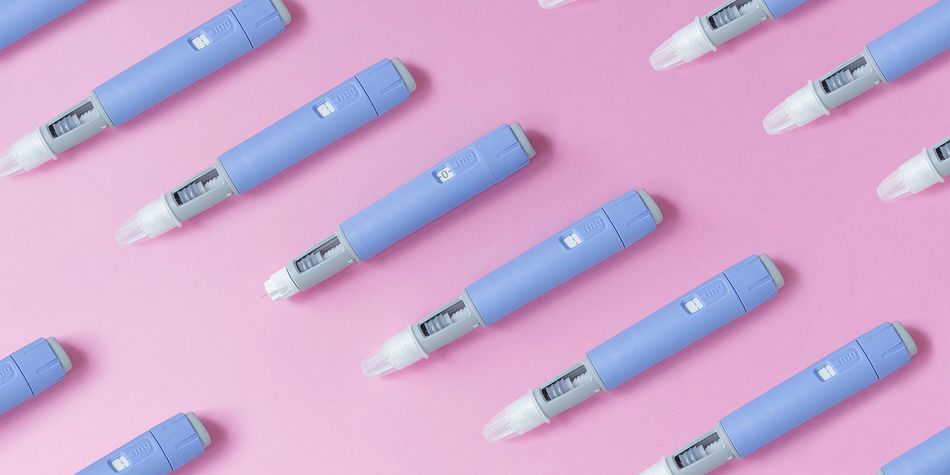
Weight loss injections like Ozempic, Monjaro and Wegovy are skyrocketing in popularity but are online pharmacies following the rules?
In this episode, we sit down with Which? senior investigative researcher Sara Spary to discuss her investigation into online pharmacies. She reveals how easy it is to bypass safeguards by using fake GP details and fabricated health conditions to buy these prescription drugs.
We also chat about the 'cosmetic' illusion created by aggressive social media marketing, how the high street is reacting, plus Sara shares crucial advice on how to avoid dangerous counterfeit medication online.
Erica: Weight loss injections. 1.6 million people use them, but are the pharmacies prescribing them responsibly? Welcome to this podcast from Which?
Hello, it's Erica in the Which? studio. Today, I've got Sara Spary here, who's a senior investigative researcher for Which? Hi, Sara.
Sara: Hi.
Erica: We're talking about weight loss jabs. They're so popular – 1.6 million people are using them. Can you tell us a bit about how they started first, and then we'll get into your investigation? But how did GLP-1s get around? What was their genesis?
Sara: GLP-1s were originally discovered as a useful diabetes medication, and then over time, the scientists realised that you could lose weight on them as well. You've probably heard of Ozempic. That's a kind of drug that a lot of A-list celebrities were using to lose weight, maybe before a red carpet appearance, that kind of thing. Ozempic was then licensed for general use in the UK as well.
Erica: And Mounjaro as well is another one.
Sara: Yes, Mounjaro, Wegovy. And then it was only a couple of years ago that they became available for general prescribing in the UK. You can get them on the NHS, but it's really, really difficult to get them. To be eligible on the NHS, because they're so expensive, they obviously have to balance the cost benefit – you have to be very obese and have several related health conditions.
To get them privately is a lot easier. What we've seen is a huge growth in the online prescribing market for these weight loss jabs – an entire industry is built around them. Us being Which?, we realised that a lot of people are using them, like you said, 1.6 million people. We also know hundreds of our readers are using them as well. Although interestingly, they're not necessarily being open about that, because there's quite a lot of stigma around using them.
We wanted to look into them and see what our members were interested in, and look into them and see how they work, and how people can buy them and things that they ought to be aware of as well, because they are medications, they're not a cosmetic product.
Erica: And we'll talk about the stigma around it a bit later. How do they work exactly? What are these medications doing within our body?
Sara: I'm not a scientist, but in a really basic way, they essentially mimic the hormones that make us feel hungry. People who've used them have described it as almost like they turn off food noise. They stop you from feeling hungry, they slow down your digestion, they mimic the hormones that tell us that we need to eat more, and they suppress them – suppress our appetite.
Erica: Okay, tell us about your investigation. There were four online pharmacies that you got into, explored.
Sara: I think it's worth going back a little bit and talking about when we first looked into this. In 2024, which is when these things started really picking up, that's when we first looked into it. What we found was that it was incredibly easy to game the online prescribing system. We were able back then to fairly easily get hold of these medications by just lying about our weight, and we found there was very little verification in place.
A year ago, the regulator, the General Pharmaceutical Council, issued some updated guidelines for online prescribers stating that they needed to start verifying the information that patients were giving them. Just to explain, when you have a consultation for one of these jabs, it's online, and you fill out a big questionnaire, and you tick loads of boxes, and you declare your own information. What the regulator said was that this wasn't going- far enough, that there needed to be some kind of level of verification and two-way communication.
It was against that backdrop that we wanted to revisit to see what had changed, if anything. Actually, a lot had changed. We found that the rules had tightened up quite a lot. Whereas in 2024, we were able to essentially self-declare anything we liked, this time round, we did find online pharmacies were very strict at verifying your weight and your BMI.
It's a little bit complicated, but we need to talk briefly about how these drugs are licensed.
Erica: Yes, go on, go for it.
Sara: They're licensed for weight loss, but you have to hit certain thresholds. You either have to have an obese BMI, which means you're eligible, or you can be overweight, which I am, so I gave my genuine weight, but you have to have a health-related co-morbidity. That would be something like diabetes or high blood pressure.
Erica: High blood pressure, yeah.
Sara: Which is the one we picked. I don't have high blood pressure, but that's the co-morbidity that I chose to test their systems. We found that four pharmacies gave us weight loss jabs without answering any questions about this supposed health condition, which they should have – they should have tried to verify that information. Some of them did actually get in touch with us and say, "No, we can't prescribe this drug unless you can prove you've got the condition."
I think what that shows there is a wide variation in the interpretation of the rules, and into that, we have this grey area where we've got this industry growing around this new drug, and there are still a few loopholes where perhaps it's not consistent across the board about how pharmacies are approaching it.
Erica: Nothing's quite standardised.
Sara: Nothing's quite standardised, and I think with any set of regulations and complicated rules and guidelines, there's a degree of it being open to interpretation. When we took our findings to the General Pharmaceutical Council, they said they were concerned about what they described as inappropriate prescribing. Effectively, they were concerned that we were able to get these drugs without having all that information verified first.
Erica: This feels like it nicely takes us on to this off-label prescribing, which does happen, it's something that pharmacists do do. Can you tell us a bit about this?
Sara: Off-label prescribing is something that happens across the board in clinical settings. What it essentially means is that a drug can be prescribed for use if it's not specifically licensed for that use, if it's in the best interest of the patient. In the case of weight loss drugs, what we found – we were quite interested to see – was that a couple of the providers said that they routinely prescribe these drugs off label. They would argue that they issued me the drugs because they took into account my clinical picture and thought I would benefit from having them.
One of the benefits, great things about being a journalist or a researcher, is that you get to speak to loads of people, kind of off background, and sometimes what people tell you doesn't necessarily always make it into print, but we do understand that generally with off-label prescribing, the burden of clinical appropriateness is a bit higher. We were still- there's still question marks about whether or not that's appropriate. They would have to show that behind the scenes, that it was certainly more appropriate to issue that drug and that I would benefit from that drug more than if they didn't give it to me.
Erica: And so this immediately makes me think, do pharmacists need to have a conversation with your GP to do this? Is there any sort of link between someone that knows your health a bit more intimately than just a pharmacist on the high street or online?
Sara: No, basically, but there kind should be, according to the regulation. One of the things the regulations say is that it's best practice for a pharmacy to notify your GP, because like you say, otherwise there's no big picture of what you're doing with your health.
Most pharmacies do require GP details, some of them don't. Again, that's that interpretation of the rules and it being not consistent across the board. What we did in our investigation was we only included pharmacies that would allow us to put fake GP details. That was the other part of our investigation, it was, are they flagging it? In the case of these four pharmacies, they didn't, so we just simply made up a fake GP and it wasn't flagged. But there were other pharmacies that did flag it.
Erica: Wow. Can you tell us, talk us through the process? You would go on to this online pharmacy, you put your details in, share your BMI if you know it, your weight maybe. Do you take pictures? Do you have to show, do you have to prove how much you weigh? Because I could put in that I weigh, I don't know, a certain number, because I know then I'm definitely going to get this drug.
Sara: Actually, we found that they are quite good at verifying your weight. For most of them, we had to take a live recording of us weighing ourselves, and we had to send pictures of us showing our body composition, that kind of thing. I think certainly what we've seen, versus 2024, is that that has certainly tightened up.
I want to make the point, I'm not a high-risk patient, right? I have got an overweight BMI, I'm sure these clinicians thought it's very low risk to give this medication, but I think what we set out to do was to see how consistent it was, because when you're a consumer and you're shopping for these things, which we know they are, we want to know what they can expect in terms of safeguards and stuff like that.
Erica: Absolutely. Can we talk about the stigma that's around these drugs? There is a stigma around weight loss drugs, it's seen as a quick fix, and therefore, you almost have to earn your skinniness. But can you talk to us about Deborah, who didn't tell her husband?
Sara: First thing I will say is that we're not taking any position on this. We're not saying these drugs are bad, that's not what we're saying at all. I think they've been very life-changing for a lot of people, and in the case of Deborah, she was one of the people who I interviewed for this magazine feature that we published in June. I think she had lost something like six stone.
In the beginning of her journey, she talked to me about how she didn't tell anybody that she was taking these drugs, because she was embarrassed. I think it's interesting because that's a conversation I've had with a lot of people. I spoke to several people for this magazine article, and Deborah was the only one who was happy to be named.
Lots of which- long-standing Which? members are taking these drugs, but they don't want to say publicly. It's not anyone's business if you're taking these drugs or not, but their concern really was around the stigma, like you say. There's this social attitude that some people celebrate it, other people seem to take a stance on it that it's a bad thing. We're not taking position, we're not scientists, we're not medical professionals, but yeah.
Erica: There's lots of emerging research into GLP-1s, and what they can do for you. Can we quickly maybe talk a little bit about some of the side effects that aren't so great, that you might experience if you are taking a GLP-1?
Sara: I think it's very common for people to have gastro symptoms, so diarrhoea, vomiting, pain, bloating, that kind of thing. They're very common, and lots of people I spoke to have experienced that, not all.
But there are also some serious side effects as well. These are drugs, so with all drugs, there's going to be some risks. That can include pancreatitis, in some extreme cases, it can cause blindness. I think that it's worth people being aware of that as well, that they're not just- they're not a cosmetic product, they are a drug, a medicine, and they're regulated accordingly.
Erica: That's also something that was in your piece in the June issue, that it's being treated a bit like it's not a medical product.
Sara: Yes, we seem to be with GLP-1s, there's this strange situation emerging where these are- these are medicines, with all the side effects we just discussed, but sometimes the marketing of them makes them appear like they're just for cosmetic use.
That's something we see online a lot. For me personally, since researching GLP-1s, my whole algorithm has just completely pumped full of posts basically targeting me with weight loss services. One important thing I want to mention, it's a bit technical but it's interesting, is that these weight loss companies, they're allowed to advertise weight loss services, they're just not allowed to advertise the actual drug.
In lots of adverts that we've seen, there's very little difference, you know that they sell GLP-1s, so effectively, I certainly feel in my algorithm that I'm being bombarded with ads for weight loss jabs. The Advertising Standards Authority last year issued what's known as an enforcement notice reminding advertisers that these are drugs, simply put, you're not allowed to advertise medications. These companies are advertising the services around them, you can't advertise the actual medicine.
Erica: 900 pharmacies broke those rules.
Sara: 900 adverts, so that would be adverts online, it would be social media posts. We've seen a lot of affiliate marketing with influencers, that kind of thing. It's not something we went into in depth in this article, but we know that's a problem that across the board has, you know, the Advertising Standards Authority has been cracking down on.
Erica: Because you've done this investigation, you've received lots of emails. Can you tell me a bit about that, because I think that can also be something that encourages people to buy it or keep buying it, even if they're if they're not? Weight is one of those things where it's actually quite an emotional thing, people have quite a deep connection with their body and how they look, and how the world perceives them. Can you tell me a bit about this, and the emails you've been getting off the back of doing this investigation?
Sara: You're totally right about that, about how connected- it's such a sensitive subject for people. I've definitely found since looking into this, I'm being bombarded with adverts constantly when I log on to Instagram, for example, with weight loss offers and all sorts of different providers, ones that I didn't even include in the investigation. The algorithm certainly knows that it's a topic that I've been interested in.
I've also had loads of marketing emails and text messages as well, encouraging me to sign up for a reduced rate, so encouraging me to reorder. Some of the providers that did send us the jabs have since been trying to give me money-off codes to reorder them. I think that just shows what other medicine would you experience that with? If you go online and you order painkillers, are you going to get texts?
Erica: Buy less, yeah. We've got a discount on paracetamol. Yeah, it's strange.
Sara: Exactly. If you speak to experts, whilst there's a really broad consensus about these being good medicines, there's also quite widespread concern about the extent to which they're being marketed as consumer products, and they're not consumer products, they're medicines.
Erica: Yeah, I feel like that's something that we really need to reiterate, it is a medicine, it's not a regular consumer product like a bag or some clothes or whatever, it's quite different. Can we talk about some of the emerging research that's coming out, some stuff to do with addiction and GLP-1s?
Sara: These drugs, a lot of people will say they're absolutely revolutionary in some cases. Obviously, they're a drug for diabetes, they're helping people lose weight, but also, the National Institute for Health and Care Excellence earlier this year approved the main drugs, which is Mounjaro and Wegovy, for use in the UK for people who have had heart attacks or strokes, because they found that it's a really useful tool for preventing future cardiac episodes. There's also been interesting research showing that they can cut addiction and things like that. I think some people feel fairly excited about these drugs and being on the cusp of some kind of revolution in medical care.
Erica: Something we've seen lots of, and you just need to walk down a high street and you'll see it, but it seems like lots of the restaurants and fast-food chains are kind of almost reacting to GLP-1s, like people doing half a sandwich, because people aren't needing to eat as much, they have a suppressed appetite on this. Can you tell us how the high street's kind of reacting?
Sara: I think it's having quite a profound impact, or at least at the beginning of having a profound impact. I was reading a piece in The Grocer magazine, which is the industry magazine for the food industry about this, I think they've covered it a bit. There seems to be a big trend towards what you described, which is smaller portions, because people just don't have that appetite.
Last year, Greggs even mentioned weight loss injections as a reason why they'd had a tough run of results. Pret is selling half-sandwiches, I'm not sure if Pret's come out and said that's specifically for weight loss jabs, but I think it shows you the direction things are going in. And then M&S and Boots as well have ranges that are targeting people that can just eat a smaller amount. I will say you're probably still paying quite a lot for these smaller portions, but I think the idea is to give people a sort of more nutrient-dense meal when they can't eat quite as much.
Erica: Protein.
Sara: Protein, yeah.
Erica: Something, when you are losing lots of weight, going from size 22 to size 12, you're obviously losing lots of fat, but you're also losing lots of muscle. Can you tell us a bit about that?
Sara: This is another side effect of the drugs. When you lose weight, and that could be just losing weight through going on a diet without having GLP-1s, you can lose muscle mass as well. To counteract that, you need to make sure you're eating a really nutrient-dense diet, and that includes a lot of protein, because it helps you to not lose- shed muscle mass. Muscles are really important in our body, so it's important to try and maintain them.
Some people I spoke to for this piece talked about the importance of weight-bearing exercises as well, like weightlifting, that kind of thing. I think it's particularly important, if you are over sort of 65 and you're taking these medications, you should be even more aware of that, really.
Erica: Because you naturally are losing a bit more muscle, a bit more fat as you get older, so it's something to kind of-
Sara: That's right, and in an extreme case, you could become quite frail if you were to lose a lot of muscle. Actually, one of the people I spoke to, again, didn't want to be named because of the stigma, I think- I'm just going to check here how old she was. She's in her late 70s, and she's taking these jabs, and she talked about her prescriber making it really clear to her that she needed to make sure she was taking enough protein and doing weight-bearing exercises, so that's something she's kind of aware of. There will be people who are not aware of that, which again brings me round to this fact that these are medications, they're not cosmetic products, so when you take any medication, you've got to be aware of the side effects and muscle loss is going to be one of them.
Erica: Coming off the drug, if someone has had a moment where they've taken it, and now they feel quite satisfied with their weight, and they've decided to come off the drug, is there anything that people need to be aware of when they are either reducing the amount that they're on the drug or just coming off?
Sara: What happens when you go on these drugs is you go through your consultation, you get your initial dose, and then when you reach your target weight, which will obviously be personal, that will vary from person to person, you go on something called a maintenance dose, and that's designed to suppress your appetite enough to keep you at that weight.
Some people who I spoke to said, and in fact, Deborah who we talked about earlier was like, "If it's something I have to take at that maintenance dose long term, then so be it." Other people will aim to come off it. It's very expensive for people.
Erica: Well, that's another thing we haven't spoken about. We're talking £100 to £200 a month.
Sara: Yeah, just for a starting dose, and obviously depending on your weight, you might go on a higher dose and yeah, you could be talking a couple of hundred quid easily a month, more maybe for some doses, so it's a serious financial commitment.
When people come off them, it's very common to experience weight gain, and that's just because you're eating more. You might not realise it in the beginning, but you have a greater appetite. What people say is that it's important to have lifestyle changes as well as being on these drugs, but one of the people I spoke to, she said she had gained some weight, a couple of kilos maybe, since dropping her dose to the minimum, but that she was able to lose so much weight in the beginning that she felt that was a manageable thing to maintain, that she could kind of lose that weight. It's common to gain some weight when you come off them.
Erica: Do we have any take-aways from Which? that we would like people to know so they can be safe around buying online?
Sara: I think it's really important that people, please don't buy these drugs on social media. Don't buy them from a beauty salon in your high street. Buy them from a registered pharmacy. You can go online, you can work out what the registered pharmacies are and make sure you're buying them from a legitimate supplier, because there have been warnings from the medicines regulator about dangerous fakes out there.
It's really important people are aware of that because that could be dangerous. It's important to buy from a registered pharmacy, a licensed pharmacy, make sure that you know that you're buying from a legitimate provider essentially. If a deal seems too good to be true, it probably is, and you don't want to play with your health. Sara, thank you for joining me.
Sara: Thank you very much for having me.
Erica: Thanks for listening to this podcast from Which?, the UK's consumer champion. You can find plenty more advice about what we discussed today in the show notes. There, you'll also find a link to become a Which? member for 50% off the usual price, an offer exclusively available to you, our podcast listeners.
Joining Which? will not only give you access to our product reviews, our app, one-to-one personalised buying advice, and every issue of Which? magazine across the year, but you'll also be helping us make life simpler, fairer, and safer for everyone.
Don't forget to hit subscribe wherever you're listening. That way, you'll be notified whenever we release a new episode of Which? Money, Which? Shorts, or any other podcast we make for you. And if you want to get in touch with us, then follow us on social media @WhichUK or drop us an email to podcast@which.co.uk. See you next time.
Be a smarter consumer
free newsletter
Choose well, buy better and save money with the Weekly Scoop.
Unsubscribe whenever you want. Your data will be processed in accordance with our Privacy notice.
More podcasts from Which?
The Which? podcast showcases the best content from across our website and magazine.
Which? Money episodes, released on Fridays, give advice to help you get on top of your bills and tackle the issues hitting your pocket, from spiralling energy costs to your weekly food shop.
The Which? Shorts podcasts offer you a free insight into some of our favourite articles from our suite of magazines.
Plus, keep an eye out for bonus episodes that tackle important issues, from motoring to tech, health and wellbeing to travel.
How to listen to the Which? podcast
We're always releasing new episodes, and the podcast is available wherever you usually listen to podcasts.
Subscribe using one of the links below or click this link on your mobile to find us in your favourite podcast app.
As part of your subscription, Which? members also get access to exclusive podcasts.
- Listen to member-exclusive podcasts on our website
- Listen on the go by downloading our app on Google Play
- Listen on the go by downloading our app from the App Store
If you're not already a member, podcast listeners can get 50% off the first year of an annual membership.