
BYD
Seal (2023-)
£43,294Typical price
Get Digital access £9.99 per month, cancel at any time.
Already a member?Log in
From 8.92p per mile
113out of 825 products for running cost

With a masters degree in automotive journalism, Dino has a forensic knowledge of the car industry and works closely with our lab to find the best (and worst) models.

Plenty of new car brands have emerged in the UK over the past few years, with one of the largest being BYD – and it's got Tesla firmly in its sights. Both focus on electric vehicles (EVs) and are reliant on Chinese manufacturing and technology. But what sets them apart and which brand should you choose?
We've lab-tested numerous cars from BYD and Tesla, rating them for everything from performance to practicality. Here, we take a close look at the two brands, including how their cars have fared in our lab tests, Euro NCAP crash tests and more.
Best electric cars: discover the models that aced our tough lab tests
The car division of BYD was founded in 2003 and launched its first model way back in 2005, but it only began selling cars in Europe in 2020.
BYD is based in China, and many of its factories are located there, although it also has manufacturing facilities in Brazil, Hungary, India, Indonesia, Thailand and Uzbekistan, with others in Cambodia, Hungary and Turkey currently under construction.
The BYD brand has seen rapid growth in sales and model lines, with nine models currently offered in the UK.
Tesla was founded in 2003, and its first car, the Lotus-based Roadster, went into production in 2008.
It's based in the USA but has factories in China, Germany and the USA. It currently offers two cars in the UK: the Model 3 and the Model Y, with the latter being the world’s bestselling EV in 2024.
We’ve lab-tested a range of BYD and Tesla cars. Here are the key details for those that are available to buy new.
| BYD Dolphin Surf | BYD Dolphin | BYD Atto 2 | BYD Atto 3 | BYD Seal U DM-i | BYD Seal | BYD Sealion 7 | Tesla Model 3 | Tesla Model Y | |
| Price (from) | £17,696 | £28,483 | £29,244 | £35,822 | £33,340 | £43,050 | £47,025 | £39,990 | £44,990 |
| Battery size range (kWh) | 30 - 43.2 | 44.9 - 60.4 | 51.1 - 64.8 | 60.5 | 18.3 - 26.6 | 82.5 | 82.5 - 91.3 | 58 - 79 | Unknown |
| Claimed EV range (miles) | 137 - 200 | 195 - 265 | 214 - 261 | 260 | 43 - 78 | 323 - 354 | 283 - 312 | 323 - 466 | 314 - 391 |
| Maximum charging speeds AC/DC (kW) | 11/85 | 11/150 | 11/155 | 11/150 | 11/18 | 11/150 | 11/230 | 11/170 | 11/210 |
| Length (metres) | 3.99 | 4.38 | 4.31 | 4.46 | 4.78 | 4.8 | 4.83 | 4.69 - 4.72 | 4.75 |
| Width (metres) | 1.97 | 2.02 | 2.07 | 2.07 | 2.09 | 2.15 | 2.19 | 2.09 | 2.13 |
Boot space (litres) | 308 | 310 | 260 | 355 | 425 | 325 | 520 | 385 - 415 | 420 |
Of all their cars, it’s the BYD Seal and Tesla Model 3 that have most in common, with both being large saloon EVs.
While the Model 3 was launched back in 2019 (and heavily updated in 2023), the Seal first went on sale in 2023. As well as looking similar, both come with a lot of equipment as standard, long claimed driving ranges (323-332 miles in the lowest-range versions) and touchscreen-heavy interiors.
There are some noticeable differences, though. Our lab tests revealed the Model 3 can be a very efficient EV, but the same can’t be said of the Seal we tested.
The Seal also proved to be less spacious for passengers and luggage in our lab tests than the Model 3. The cheapest Seal also costs £8,000 more than the entry-level Model 3.
BYD Seal vs Tesla Model 3 cabin
1 / 2


A large collection of images displayed on this page are available at https://www.which.co.uk/reviews/new-and-used-cars/article/byd-v-tesla-which-is-best-aHibp3U3ryvc
However, we think the Seal’s cabin makes a better impression than the Tesla Model 3’s, as it has impressive quality throughout. Our lab tests also revealed the Seal to have a slightly shorter braking distance than the Model 3.
Our reviews of each car reveal additional pros and cons, along with lab-tested electric range and more.
Which? members can log in to read our full reviews. Alternatively, join Which? today to get instant access.
Seal (2023-)
Get Digital access £9.99 per month, cancel at any time.

Model 3 (2019-)
Get Digital access £9.99 per month, cancel at any time.
Having taken its Model X off sale, Tesla has only one other car available to buy new in the UK: the Model Y. In terms of the cars we've lab-tested, its closest BYD rival is the Sealion 7.
Both are large SUVs that have coupé styling. Like the two brands' other cars, both feature large touchscreens, have decent safety credentials and are well equipped.
Our lab tests found that the Sealion 7 is much less efficient than the Model Y and doesn't have as much cabin space. However, the Sealion 7's cabin is easier to use than the Model Y's.

Model Y (2022-)
Get Digital access £9.99 per month, cancel at any time.

Sealion 7 (2025-)
Get Digital access £9.99 per month, cancel at any time.
When it comes to reliability, it's fair to say Tesla’s record is mixed, with our latest car survey revealing that some models are more dependable than others.
At a brand level, our survey suggests that newer Tesla cars (those aged 0-4 years) are most commonly affected by air conditioning and suspension component faults, while older cars (aged 5-9 years) are most affected by suspension component faults.
As for BYD, air conditioning, airbag and paintwork faults were the most common issues to be reported by owners.
You can get detailed reliability information for BYD and Tesla by using the reliability lookup tool in our guide to the most reliable cars.
All BYD cars come with a 6-year/93,750-mile warranty in the UK, which is significantly longer than most other car brands (although the mileage term is lower year-for-year).
Tesla cars registered from 2024 onwards come with a 4-year/60,000-mile warranty.
As with most EV brands, both offer 8-year battery warranties (with a minimum 70% battery retention). All BYD batteries are covered for 155,350 miles, while the mileage limit for Tesla cars is 100,000 to 150,000 miles, depending on model and version.

BYD and Tesla cars perform well for safety, with every model tested by Euro NCAP receiving five stars out of five. However, Euro NCAP found more issues with the driver assistance technology (mainly related to the driver monitoring systems) in BYD’s cars than Tesla’s.
Both also offer a lot of safety kit as standard. BYD’s cheapest car (the BYD Dolphin Surf hatchback) comes with adaptive cruise control, lane-keep assist and several airbags.
The cheapest Tesla (the Model 3) has a similar level of standard safety kit but doesn’t have cross-traffic alerts. Lane-charge assist technology is part of the Enhanced Autopilot pack.
So far in 2026, BYD is outselling Tesla in the UK as its 95% sales growth is in sharp contrast to Tesla's 22% rise over the same period.
In terms of the number of cars sold, BYD has registered 37,795 cars in the UK so far in 2026 (compared to 19,390 for the same period in 2025), while Tesla has registered 27,677 cars so far this year.
In fact, BYD’s current UK market share of 3.32% is above that of long-established brands like Volvo (roughly 3.1%) and is similar to Renault’s.
Ultimately, whether you choose BYD or Tesla depends on what you’re looking for in a car. But when comparing the BYD Seal and Tesla Model 3, the latter benefits from a lower list price, better efficiency and a more spacious interior.
At a brand level, it's worth knowing that Tesla cars are sold at fixed prices through an ‘agency’ model (meaning you can only order new cars from Tesla directly). BYD cars are typically available from traditional dealers that have the flexibility to offer discounts, so - depending on current offers and your negotiation skills - you might be able to secure a good deal.
If you’re thinking of buying a Model Y, it’s worth noting that the facelifted model we've tested is much more efficient than earlier Model Y cars we've tested and is also far more efficient than the Sealion 7.
Whether you opt for Tesla or BYD, be sure to read our full reviews before making your mind up, as each car has its own pros and cons.
In recent months, Tesla has focused on introducing more affordable versions of its existing models. But BYD offers a wider range of models than Tesla and is quickly expanding its model line-up in the UK. Unlike Tesla, it also sells plug-in hybrid cars, which may be a deal breaker for some people.
Sealion 7 (2025-)
Get Digital access £9.99 per month, cancel at any time.

Seal U DM-i (2024-)
Get Digital access £9.99 per month, cancel at any time.

Dolphin Surf (2025-)
Get Digital access £9.99 per month, cancel at any time.

Atto 2 (2025-)
Get Digital access £9.99 per month, cancel at any time.
Seal (2023-)
Get Digital access £9.99 per month, cancel at any time.

Dolphin (2023-)
Get Digital access £9.99 per month, cancel at any time.

Atto 3 (2023-2026)
Get Digital access £9.99 per month, cancel at any time.
Model Y (2022-)
Get Digital access £9.99 per month, cancel at any time.
Model 3 (2019-)
Get Digital access £9.99 per month, cancel at any time.
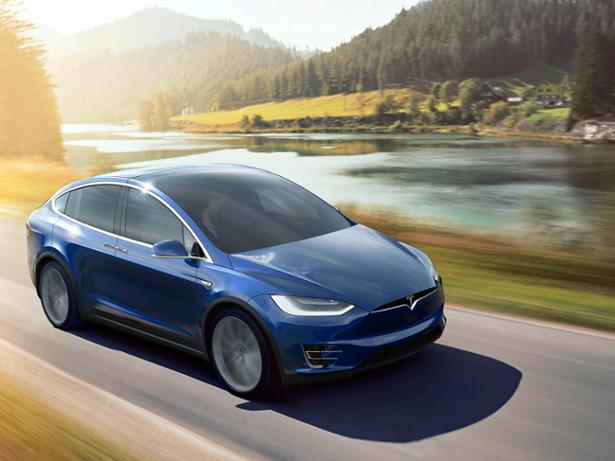
Model X (2016-2025)
Get Digital access £9.99 per month, cancel at any time.
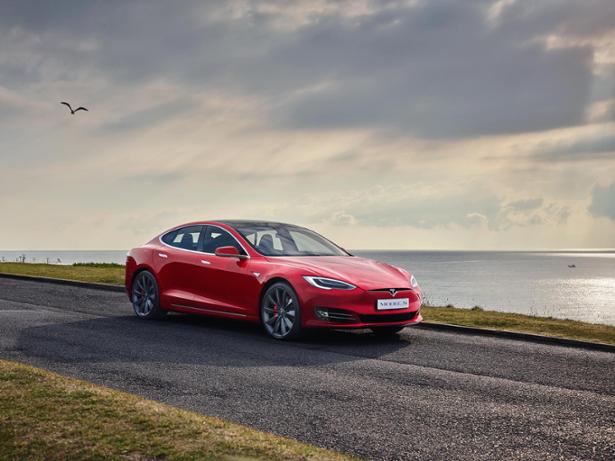
Model S (2013-2024)
Get Digital access £9.99 per month, cancel at any time.
Find the right policy for your vehicle using the service provided by MoneySuperMarket
Get a quote now