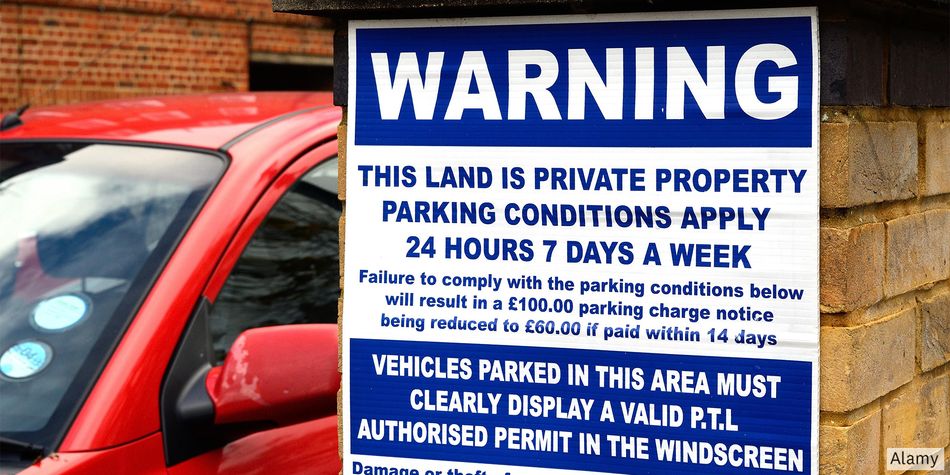
Erica McKoy: ANPR cameras are everywhere. But have you been one of the unlucky few to be caught out by their errors? Welcome to this podcast from Which?
Hey, it’s Erica here with a brand new episode of the podcast. I’m joined by Hannah – hello!
Hannah Downes: Hi!
Erica McKoy: She’s a senior writer here at Which?, and you’ve been doing lots of work into ANPR cameras. What are ANPR cameras?
Hannah Downes: So, ANPR cameras are used in car parks, petrol stations, and on the roads more generally to monitor wrongdoing and to monitor crime.
Erica McKoy: And these cameras generally have a 97% accuracy rate. They’re quite good, but then there’s something going on here where people are getting caught out.
Hannah Downes: Yes, so a 97% accuracy rate might sound good, but that actually means the 3% that’s missing there actually means that there are millions of misreads every day. And so for drivers, that means that if you use a car park that uses ANPR and there’s a misreading, you could end up receiving a fine – an unfair fine. And that can lead to debt collection letters; it can be really hard to prove that you didn’t overstep, so it can cause a real headache.
Erica McKoy: Can you talk to us about one of our colleagues because they experienced it – James. Not James that does the podcast every week, another James. What happened with him and his car?
Hannah Downes: So, James fell victim to something called double dipping. And if you don’t know what that is, double dipping is where you use a car park two subsequent times – or it could be more – in a short period of time. So perhaps you use a station car park a couple of times a day to drop people off, and the cameras don’t record you leaving the car park the first time and entering it the second time. Therefore, they think you’ve been there that whole time and you receive a fine. And this is what happened to James, who regularly uses the same car park by the train station to drop his partner off. And was accused – I think it was three times in a couple of months – he received three unfair fines claiming that he’d stayed there beyond the period that was allowed.
Erica McKoy: And how did he get around this? How did he sort this out? Because I can imagine it’s quite hard to prove that you weren’t there. How do you prove that you weren’t in the car park this whole time?
Hannah Downes: Well, that’s the thing. It’s on the driver to prove that they hadn’t overstayed rather than on the car park to prove that you had, which is really unfair. But James was – he was very clever about it. He managed to use the Google location data on his phone to show that he’d been elsewhere at the time they were claiming he’d been in the car park. And then I think he also used his train ticket stubs to show that he’d been somewhere else as well. And then he used the Which? letter template to appeal the fines, and thankfully they were both written off.
Erica McKoy: Not everyone will be thinking, "Oh let me check my Google location" and that’s quite – he got quite lucky, I think.
Hannah Downes: Yeah, and I think it’s quite invasive. Another person we spoke to who was fined after a double dipping incident, they ended up taking screenshots of their WhatsApp messages with their partner that had confirmed that they were somewhere else. So it’s crazy that you have to share all this data – your location data, your WhatsApp messages – to prove that you weren’t there.
Erica McKoy: They have been around for a long time. I researched – they were invented in the 70s, introduced to London in a big way in 2003. This isn’t a sort of old, crappy technology that’s just not working. Sometimes these cameras are just being badly installed, aren’t they?
Hannah Downes: Yeah, so if a camera isn’t installed properly or is installed at a bad angle, then you can imagine it’s hard for them to actually pick up people’s number plates. And that can lead to misreadings. Tailgating is another issue. If cars are driving quite closely behind another car, the car in front could cover up the number plate in front, so then the camera can’t read it. And then obviously with any technology, there are glitches sometimes. It’s not perfect. So it might just be that a camera reboots and misses all the cars that left during that time. Yeah, that would be really bad.
Erica McKoy: Can you also tell us about – there was a guy called John in Gloucestershire. What’s his story?
Hannah Downes: Yeah, John had an unfortunate experience. He received a legitimate parking fine – he had done something wrong, so he was happy to pay it. He went on the car park website to pay it and then he was surprised to find that he actually had four other fines against his name that he hadn’t been notified about before. So this was a big surprise for him. And looking into it, he realised that the fines were related to a car park near a holiday home he’d stayed at in 2024. And he hadn’t used that car park, he’d just driven past it to get to the holiday home. And because of the way the cameras had been installed in that car park, they were picking up his number plate every time he drove past.
Erica McKoy: And he didn’t know? They didn’t notify him?
Hannah Downes: No, he hadn’t been notified. And I’m not sure why that is, but obviously that is quite concerning, especially as these fines can lead to debt collection letters eventually. So it’s lucky he caught them when he did.
Erica McKoy: Otherwise it’s like you might end up just being surprised by a letter coming through your door or even someone coming to your door and being like, "Hey, you’ve got some debt that you need to pay". Let’s talk about number plate cloning. That’s a big thing as well that lots of people are experiencing. And it’s not just in London – I feel like lots of people expect London to be the hotspot for number plate cloning. It’s happening all around the country – Cardiff, Manchester. What is it and what’s going on?
Hannah Downes: So, number plate cloning is where criminals distort their number plate so that it mirrors somebody else’s. They then might overstay in a car park, fill up with petrol and not pay – just drive off. We had a case study who that happened to, and it took him about a year to get the fines written off. Or just commit crime more generally. And because they’ve distorted their plate – so they might do that by using tape or you can put filming, a certain type of film over the number plate and it means that the cameras don’t pick it up properly – because they’ve distorted the plate, they don’t face any of the consequences for those actions.
Erica McKoy: And cloning and distorting of a plate is slightly different, right? I’ve heard of people attaching a leaf to their number plate just so you don’t get the full number plate, but that’s slightly different to copying someone else’s number plate.
Hannah Downes: Yes, so with cloning that is where a criminal will use tape or something to make their plate mirror somebody else’s instead of their own. So we had a case study who this happened to, and the criminal used black tape to change the L on their plate to an E so that it would mirror this case study’s.
Erica McKoy: And then this person just unknowingly – this innocent person just doesn’t know that someone else is driving with a number plate that looks similar to theirs. And something we’ve seen a lot of are people cloning number plates in London because of the ULEZ fees and fines that are around. Can you tell us a little bit about ULEZ and what that means?
Hannah Downes: Yeah, ULEZ is the Ultra Low Emission Zone in London. And if you drive through that zone, you get charged a congestion fee for driving through. So criminals are using number plate cloning and ghost plates in order to avoid paying these charges. So we sent a Freedom of Information request to Transport for London to see how many fines they’ve had to cancel due to the fact that the person’s number plate had been cloned. And last year, it was just over 9,000 fines that had to be cancelled because the person appealed saying that their number plate had been cloned.
Erica McKoy: Wow, yeah, that’s a big number.
Hannah Downes: It is a big number, yeah. People just unknowingly not realising that someone else is just driving around with a number plate that looks like theirs. Ghost number plates is something you just mentioned. They carry a fine of £100 from the police. That doesn’t seem like enough to deter people.
Hannah Downes: Yeah, £100 doesn’t seem very much considering that these people are actually committing fraud. And in the example that I just mentioned, the case study whose number plates were cloned, the police actually contacted the offender telling them that they need to stop cloning this person’s plate. Which seems like not a huge deterrent either. The person wasn’t arrested or convicted of fraud or anything, so it does seem to be a bit of a blind spot there.
Erica McKoy: We’ve spoken about ghost plates, we’ve spoken about cloned number plates. There must be rules around number plates, surely?
Hannah Downes: Well, actually there is a lack of background checks into who can actually supply a number plate. So there’s an All-Party Parliamentary Group for Transport Safety that actually published a report on this at the end of last year. And it noted how there are over 34,000 number plate suppliers registered with the DVLA with no background checks in place. Their research also found that some suppliers handling customers’ IDs were found to have serious criminal convictions, including for fraud. So there’s a real issue with a lack of standards in this space.
Erica McKoy: And so what does this parliamentary group want to see?
Hannah Downes: So, they’ve made several recommendations on how to combat this type of fraud. They want to see the design of number plates standardised. That way it’s easier to spot if there’s a cloned plate or a manipulated plate. And they want 3D and 4D plates to be banned as well as these can distort ANPR readings. They also – I know you mentioned before that there’s only £100 fines for this type of fraud or for having illegal plates – so they think that should be increased and they think that offenders should be given points on their driving licence as well just to serve as a bit more of a deterrent. And also, really crucially, they want the number of licensed sellers to be massively reduced from this 34,000 number. And they think annual fees and regular audits will help sieve out the illegal or non-compliant sellers.
Erica McKoy: So we’ve heard all this – we’ve heard all these recommendations from the parliamentary group. What’s Which? – we both work at Which? – what are they talking about? What are they saying?
Hannah Downes: So, Which? have long been calling for standards in the parking industry to be better. And we recently responded to a government consultation on a new private parking code of practice. So we’ve called for several robust measures to be included to help raise these standards, including standardised signage across car parks, a ban on debt recovery fees, and an independent single appeal service to make it easier to challenge unfair fines. We’re also calling for a ban on parking charges issued to motorists who have paid for their stay in full in an ANPR car park. And so what that means that if you experience delays making your payment – normally there’s a five-minute grace period for you to make your payment – and if you experience delays, like maybe there’s a bad connection or for whatever reason it’s you’re a little bit over that time, we don’t think you should receive a fine as long as you’ve paid in full. This will make a big difference to stopping these unfair fines.
Erica McKoy: If someone does find themselves in a situation like James or like the older gentleman in Gloucestershire, what can you do? How can you appeal it?
Hannah Downes: If you receive a fine because of an ANPR misread – maybe like our case studies, maybe the car park claims that you were there much longer than you actually were, something like that – it is worth trying to collect evidence to show that you were elsewhere. This might seem unnecessary but unfortunately at the moment that is how you’re going to get the fine written off. So, looking at – if you have any receipts or train tickets or if you can use your Google location tracker to show that you were somewhere else, that is all worth including in your appeal.
Erica McKoy: And there’s also a letter, right? We’ve got a template.
Hannah Downes: Yes, Which? has a letter template and actually an online tool that you can use that puts together the letter for you as well. So James used this letter template to get his fines written off and that was successful, so it is well worth doing if you’re not sure how to go about it.
Erica McKoy: So there’s lots of tools out there for people if they do find themselves victim to one of these errors. We’ve also got an investigation video coming out, which you’ve been a part of. We’ve also got Kat who’s a presenter here who’s been a part of it. Can you give us a little bit of an idea of what might be coming up with that?
Hannah Downes: Yeah, so Kat’s been doing interviews with people who were wrongly fined and has been looking into it a bit more.
Erica McKoy: Exciting, that’s still to come, there’s so much more. And if you’re a Which? member you’ll get a version of this story in the magazine around mid-April. Thank you so much for joining me, Hannah.
Hannah Downes: Thanks, Erica.
Erica McKoy: Thanks for listening to this podcast from Which?, the UK’s consumer champion. You can find plenty more advice about what we discussed today in the show notes. There you’ll also find a link to become a Which? member for 50% off the usual price, an offer exclusively available to you, our podcast listeners. Joining Which? will not only give you access to our product reviews, our app, one-to-one personalised buying advice and every issue of Which? magazine across the year, but you’ll also be helping us make life simpler, fairer, and safer for everyone. Don’t forget to hit subscribe wherever you’re listening. That way you’ll be notified whenever we release a new episode of Which? Money, Which? Shorts, or any other podcast we make for you. And if you want to get in touch with us, then follow us on social media @WhichUK or drop us an email to podcast@which.co.uk. See you next time!