By clicking a retailer link you consent to third-party cookies that track your onward journey. This enables W? to receive an affiliate commission if you make a purchase, which supports our mission to be the UK's consumer champion.
How to get rid of bedbugs
Kitchen roll critic, cleaning gadget guru and loo roll expert, Hardeep has tackled 100-plus stains, and isn't afraid to make a mess and clean it up.

Drawing on nearly half a decade at Which?, Natalie helps readers cut through the noise with practical guidance on trending products, pest control, cleaning advice and money-saving tips during the sales.

The latest data from Rentokil Pest Control shows confirmed bed bug activity in the UK increased by an average of 44% year on year between 2023 and 2025.
While there isn't a bedbug season as such, and they are active all year round, they tend to be more prevalent during summer and early autumn. This is partly due to increased travel activity, and partly due to the warmer, more humid conditions.
If you spot the signs early, there are things you can do to get rid of bedbugs yourself. For larger or more established infestations, your best bet is to call a professional pest control service.
Here, we explain what to do if you spot bedbugs, and how to protect your home from an infestation in the first place.
Travelling and concerned about bedbugs? Find out how to check your hotel room for bedbugs
What do bedbugs look like?

Bedbugs are visible to the naked eye. They're oval-shaped, usually brown and can measure up to 7mm long. They're parasitic insects that feed on the blood of people and animals while they sleep; after feeding, their colour will range from dark red to brown.
Juvenile bedbugs are very small – only a couple of millimetres across. They're also pale and translucent, so they can be very easily overlooked.
‘Knowing what a bedbug looks like and knowing where they're going to be hiding will allow for early detection,’ says Alex Wade, a pest management expert and consultant member of the British Pest Control Association.
‘At that point, if the population is small and localised, you have a better chance of being able to deal with it yourself.’
Why is bedbug activity increasing?
'There’s unlikely to be one single reason behind the increase we’re seeing,' says Paul Blackhurst, head of the technical academy at Rentokil Pest Control. 'Bedbugs are expert hitchhikers, so high levels of travel and the movement of people between hotels, rented accommodation and public transport can provide numerous opportunities for them to spread via luggage, clothing and other belongings.
'Warmer conditions can help bedbugs develop and reproduce more quickly, although temperature alone won’t be responsible for an infestation. Insecticide resistance may also be playing a part in the numbers we’re seeing, but more research is needed to understand its impact.
'The bigger challenge is how easily they can go unnoticed,' he adds. 'Bedbugs are expert hiders and can survive without feeding for several months, even up to a year in cooler conditions where they enter a state of dormancy. This means a small number inadvertently brought home from a trip can become an established infestation before people realise they’re even there.'
How to check for bedbugs
Bedbugs can hide in many places, including on bed frames, mattresses, clothing, furniture, behind pictures and under loose wallpaper. It's a good idea to keep your home clean and tidy to make it easier to spot bedbugs so you can remedy any problems swiftly.
Signs of bedbugs include:
- Bites While bites can be obvious, it's important not to rely on them solely for detection. Reactions to bedbug bites can take time to appear, and some people will have worse reactions than others. Check to see if they are clustered together and forming lines – a classic sign of bedbugs rather than mosquitos.
- Small brown spots on bedding or furniture These could be faecal deposits. Since bedbugs feed on blood, they tend to leave quite dark faecal deposits that can look like mildew.
- Shed skins Bedbugs moult through their life stages, leaving behind translucent or brown cast skins.
- Odour An unpleasant, sweet, sickly scent is often present during heavier infestations.
- Spotting live insects This may sound obvious, but it's easy to misidentify bedbugs. If you see what you think are bedbugs, take a picture of the insect next to a coin (for sizing) and send it to a pest expert. They'll be able to confirm whether or not you have bedbugs.
What to do if you are bitten by bedbugs

If you are bitten by bedbugs, the bites will usually clear up on their own in a week or two. The bites can be itchy, but don't usually cause other health problems.
NHS advice is to put something cool on them, keep them clean and, if they are particularly itchy, to take an antihistamine.
Which? has researched where to find the cheapest antihistamines.
How to get rid of bedbugs
If you’re unfortunate enough to discover bedbugs in your home, there are steps you can take to get rid of them.
The key to defeating bedbugs is prolonged heat treatment. Exposing the pests to temperatures greater than 45°C for at least 30 minutes has shown to be effective, so you could try washing clothes in a hot cycle in the washing machine, tumble-drying your clothes or treating the area with a steam cleaner.
Can you get rid of bedbugs with a tumble dryer?

Tumble dryers can be effective at killing bed bugs, confirms pest expert Wade.
Throw the items you suspect are infested into the drum when they are dry and set your machine to high – just make sure to check the label beforehand, as not all fabrics can withstand high temperatures.
Bear in mind that tumble dryers are expensive to run. We've researched tumble dryer running costs, and found 10 ways to cut the cost of tumble drying.
And if you don't have a tumble dryer? 'Use a hotter washing machine cycle,' says Wade. Running a cycle around 60°C would be ideal but, again, check the label to make sure you won't ruin your clothes or bedding.
- AEG TR818P4B – SQUIRREL_TEXT_12878818
- AEG TR849P4B – SQUIRREL_TEXT_50021885
- LG FDV709W – SQUIRREL_TEXT_12879960
- Bosch WQG245R2GB – SQUIRREL_TEXT_50024768
To find out which tumble dryers we've recommended as Great Value, Best Buy or Eco Buy, read our guide to the best tumble dryers.
Can you get rid of bedbugs with a steam cleaner?

Similar to the tumble dryer, killing bedbugs with a steam cleaner works by exposing them to heat.
However, Wade warns that you 'need to be relatively up close and personal' to the bedbugs with this method, as you'll need to run the hot steam right over them.
This can be tricky and will certainly be time-consuming if your bedbug infestation has spread. But it will be effective for smaller issues that you've spotted early.
Before using a steam cleaner, ensure you remove any electronics or items sensitive to heat and moisture from the area you plan to treat.
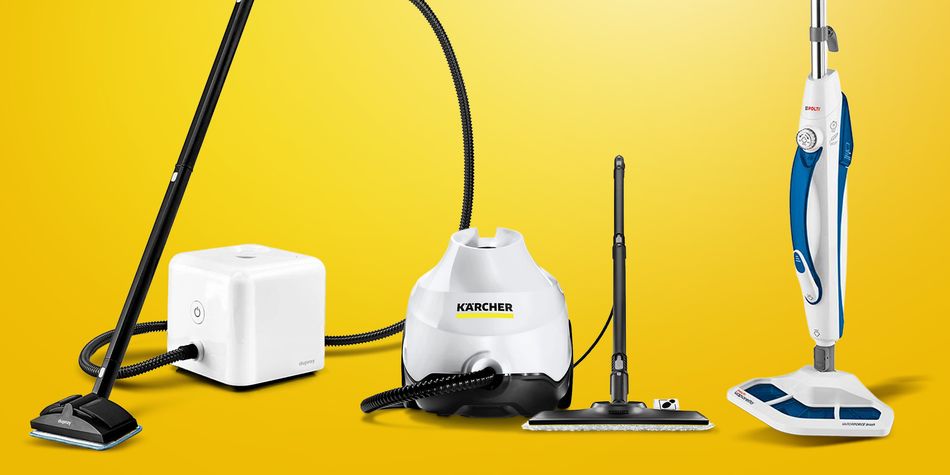
Note that there are different types of steam cleaner. To kill bedbugs, a cylinder, combination mop or handheld will be ideal. These are more versatile than steam mops, which are designed to clean hard floors.
- Karcher SC 3 EasyFix – SQUIRREL_TEXT_50019525
- Polti Vaporetto SV460 Double – SQUIRREL_TEXT_12864183
- Karcher SC 2 EasyFix – SQUIRREL_TEXT_50019526
- H20 HD 5-in-1 Steam Mop & Foldable Handheld Steam Cleaner – SQUIRREL_TEXT_50000463
To find out which steam cleaners we've recommended as Great Value, Best Buy or Eco Buy, read our steam cleaner reviews.
Can you get rid of bedbugs with a vacuum cleaner?

Unfortunately, a vacuum cleaner won't get rid of bedbugs, as they are nimble enough to escape the dust chamber, or simply survive within the vacuum.
But vacuuming is a helpful way of keeping your home clean and tidy so that it’s easier to spot any signs of bedbug infestations.
- Shark NZ780UKT – SQUIRREL_TEXT_50020091
- Shark NZ691UKT – SQUIRREL_TEXT_50018128
- Shark NV602UKT – SQUIRREL_TEXT_12853233
- Miele Guard L1 Allergy – SQUIRREL_TEXT_50021676
To find out which vacs we've made Best Buys, read our guide to the best vacuum cleaners or best cordless vacuum cleaners.
Should you get professional help for bedbugs?

If you don’t have a tumble dryer or a steam cleaner, or your bedbug infestation is serious, then call a professional.
Pest control experts are better placed to deal with large infestations as they can heat-treat entire rooms: ‘The idea of space heat treatment is you'll get a relatively high temperature over a long period of time,' says Wade.
'So wherever those insects are hiding – spread into crevices, around bed frames, on your mattresses, on your headboards – it will kill them.'
It's also important not to associate bedbugs with dirty spaces. According to Wade, the association of bedbugs with 'unclean living' has created a stigma that's not only false, but can also delay people seeking help to solve the problem.
‘If you prolong that period, the problem just simply gets worse,' says Wade. 'You should be looking to remedy that situation as soon as you're aware that it's occurred.'
He also stresses that you should avoid moving infested objects from one room to another, as this risks spreading the pests and beginning a new cycle.
Can your local council help with bedbugs?
Your local council may offer pest control services for bedbugs, which is likely to be cheaper than a commercial enterprise.
Do bear in mind that there's likely to be a waiting list, so your bedbug infestation may not get the swift attention it requires.
Also, prices for some council pest control services are based on a fixed number of visits, so if your bedbug infestation can't be eradicated within those visits, you may need to pay additional charges for further visits.
For students, older residents or those receiving qualifying benefits, the council will likely offer a discounted rate.
Should you get a new mattress if you've had bedbugs?

Throwing away your mattress and all your bedding is a drastic, and expensive, way of dealing with bedbugs.
Unless you've had your home professionally treated, there’s no guarantee that bedbugs won’t still be lurking elsewhere in your home. If you have had your home treated, there should be no need to throw away your mattress. Seek advice from your pest control expert.
But if you feel uncomfortable with your old mattress following an infestation, it might be time for a new one.
- Sleepsoul Heaven – SQUIRREL_TEXT_12880843
- Ikea Vestmarka – Available from Ikea (£129)
- Emma Original Pro – SQUIRREL_TEXT_50024927
- Jay-Be 2000 Hybrid E-Pocket Eco Truecore (130/0242) – SQUIRREL_TEXT_12924574
To find out which mattresses we've made Best Buys, read our guide to the best mattresses.
How to prevent bedbugs
If you’ve done a thorough search of your home and found no bedbugs, there are measures you can take to prevent a bedbug infestation taking hold in the first place.
- Wash clothing and bedding regularly Not only is changing your sheets regularly a good basic hygiene practice, it will also help you spot any signs of bedbugs. Make sure all dirty clothes and sheets are washed instead of left in a pile on the floor where bedbugs can hide.
- Declutter Reduce clutter in your living spaces, as bedbugs can hide in, under or behind things.
- Vacuum regularly Pay close attention to cracks and crevices where infestations can go unnoticed.
- Get a mattress protector According to Wade, mattress protectors 'reduce the available harbourage space for bedbugs', reducing the chance of an infestation taking hold.
* 'Popular' models on this page are determined by click rate to reviews over a three month period (July to October 2026) where applicable. We cannot show every retailer and cheaper options may be available.